The StairMaster for Glutes: Your Ultimate Guide to Building, Shaping & Strengthening
You want stronger, rounder, more powerful glutes. You hit the squats and deadlifts, but you might be overlooking a secret weapon right in the cardio section. Most people think of the StairMaster as just a heart-pumping calorie burner. But what if you could transform this machine into a targeted glute-building powerhouse? If your goal is to build your posterior chain, using the **StairMaster for glutes** is a strategy you need to know.
This guide provides a definitive, science-backed answer. You will learn exactly why the StairMaster is exceptional for your glute muscles, the proven benefits, and—most importantly—the step-by-step techniques to maximize your results. Get ready to turn your cardio session into a serious glute workout.
The Direct Answer: Is the StairMaster Good for Glutes? (Biomechanics Explained)
Let’s answer the core question upfront: Yes, the StairMaster is excellent for targeting the glutes, and exercise science explains why.
Your glutes are made of three main muscles. The gluteus maximus is the largest. Its primary job is **hip extension**—the action of moving your thigh backward. The gluteus medius and minimus are key for **hip abduction** (lifting your leg out to the side) and **pelvic stabilization**. [Source: ACE – Glute Function]
Every step you take on the StairMaster requires you to push your body upward against gravity. This movement is a continuous series of hip extensions. You are literally using your gluteus maximus to propel yourself up each step.
Research confirms this. A 2018 study published in *Frontiers in Physiology* measured muscle activation during different activities. It found that stair climbing produced **significantly higher activation** in both the gluteus maximus and gluteus medius compared to level walking. [Source: Stair Climbing Muscle Activation Study]
Unlike flat walking or running, climbing stairs forces a greater range of motion at your hip. This deeper flexion at the bottom of the step stretches the glutes, allowing for a more powerful contraction at the top. Add resistance, and you have a recipe for serious glute engagement.
The Proven StairMaster Glutes Benefits (Detailed Breakdown)
Understanding the biomechanics leads us to the powerful advantages. Here are the specific, research-backed **StairMaster glutes benefits** you can expect.
Benefit 1: Builds Glute Strength & Muscle (Hypertrophy)
The StairMaster isn’t just endurance training. By using higher resistance settings, you increase “Time Under Tension” (TUT). TUT is the total duration your muscle is under strain during an exercise. Longer TUT at a challenging load creates both metabolic stress and mechanical tension. These are two of the primary drivers for muscle growth. This makes a high-resistance StairMaster session similar to a high-rep strength training set for your posterior chain.
Benefit 2: Enhances Glute Shape & Definition
This benefit combines muscle building with efficient fat loss. The StairMaster is a top-tier calorie burner. According to data from Harvard Medical School, a 155-pound person can burn approximately **223 calories in just 30 minutes** of stair climbing. [Source: Harvard – Calories Burned] This high caloric expenditure helps reduce body fat, which in turn helps reveal the shapely muscle you’re building underneath. You work on muscle size and definition simultaneously.
Benefit 3: Improves Glute Activation & Mind-Muscle Connection
Many people suffer from “gluteal amnesia,” where these powerful muscles become inactive due to prolonged sitting. The repetitive, focused motion of the StairMaster serves as excellent dynamic drill to “wake up” and re-educate your glutes. Learning to feel them work during each step improves your mind-muscle connection. This principle is supported by glute activation research, which shows targeted activation exercises can improve muscle recruitment patterns. [Source Concept: Glute Activation Study]
Benefit 4: Boosts Hip Stability & Reduces Injury Risk
As you step, your gluteus medius and minimus work isometrically to keep your pelvis level. This is especially true if you avoid holding the handles for support. Strengthening these often-neglected stabilizers leads to better knee and hip alignment during all activities—from running to squatting. Stronger hip stabilizers mean a lower risk of common injuries like IT band syndrome or knee pain.
Benefit 5: Provides a High-Intensity, Low-Impact Cardio Option
You get all the cardiovascular benefits—improved heart health, endurance, and stamina—with minimal jarring impact on your knees, ankles, and back. This makes the StairMaster a sustainable choice for consistent training, allowing you to work your glutes hard without the high stress of running.
How to Target Your Glutes on the StairMaster: Master Form & Techniques
Knowing the benefits is one thing. Feeling them is another. Technique is everything for glute engagement. Here is your detailed guide on how to use the **StairMaster for glutes** effectively.
The Fundamentals of Proper Glute-Activating Form
Posture & The Hip Hinge: Stand tall with a soft bend in your knees and your core braced. Do not round your lower back. Instead, initiate a slight forward lean **from your hips and ankles**. Imagine closing a car door with your backside. This “hip hinge” position places your glutes in a stretched, mechanically advantaged position to push, which is the essence of powerful hip extension. [Source Concept: NASM – Hip Extension]
Foot Placement & Drive: Place your entire foot on the step. Initiate the push by driving through your **heel and mid-foot**. Consciously push the step down. If you push off only your toes, you shift the work to your calves and quadriceps, taking it away from your glutes and hamstrings.
Handlebar Use: The handlebars are for balance **only**. Do not lean on them or use them to pull yourself up. Research from ACE Fitness indicates that leaning on the handles can reduce glute and core engagement by up to 30%. Lightly rest your fingertips or keep your hands off completely to force your lower body and core to do all the work. [Source: ACE – Stair Climber Form]
Range of Motion: Take full steps. A deeper step increases hip flexion at the bottom, which leads to a greater range of hip extension at the top. This maximizes the stretch and contraction of your glute muscles.
Advanced Techniques for Maximum Glute Focus
Once you master the basics, these methods will further amplify your **StairMaster glutes benefits**.
- High-Resistance, Slow Stepping: Prioritize resistance level over speed. Set the machine to a level where you must move deliberately. Slower, heavier steps dramatically increase Time Under Tension, creating more muscle-building stimulus.
- The “Step and Squeeze” Method: At the top of each step (when your leg is fully extended), consciously squeeze your glute muscle hard. Hold that squeeze for a 1-2 second count before lowering. This ensures maximal muscular contraction.
- Interval Training for Metabolic Stress: Alternate between high-intensity and recovery periods. Example: 2 minutes at a challenging resistance (Rate of Perceived Exertion 7/10) followed by 1 minute at a moderate pace (RPE 5/10). This spikes metabolic demand and increases blood flow to the muscles.
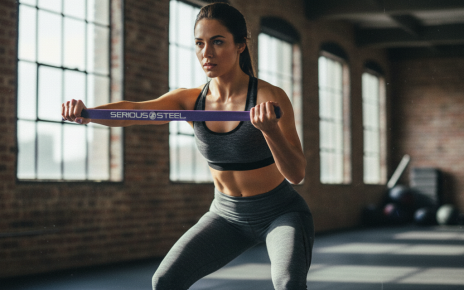
- Add External Cues with a Mini-Band: Place a resistance mini-band just above your knees. The constant tension forces your gluteus medius to fire actively to resist the band’s pull, engaging your hip stabilizers throughout the entire workout.
- Step-Back Pulses (Advanced): Instead of stepping all the way down, only lower your foot halfway before immediately pushing back up. This keeps constant tension on the glutes, never letting them rest at the bottom of the movement. Use this technique for short, 30-60 second bursts.
Programming, Integration & Common Mistakes to Avoid
To get the best results, you need to know how to fit this tool into your routine and what pitfalls to steer clear of.
How to Integrate the StairMaster into Your Workout Week
- As a Glute Activation Warm-up: Before a heavy leg day (squats, deadlifts), spend 5-10 minutes on the StairMaster at a low-to-moderate resistance. Focus on perfect form and feeling your glutes fire. This “wakes up” the muscles and primes them for heavier lifting.
- As a Standalone Glute & Cardio Session: Dedicate 20-30 minutes, 1-2 times per week, as your primary workout. Focus on high-resistance techniques, intervals, or the step-and-squeeze method. This builds both muscular endurance and strength.
- As a Post-Lifting Finisher: After your leg day strength work, hop on for 10-15 minutes. Use a moderate resistance and focus on pumping blood into the muscles. This creates metabolic stress, which can aid in growth and recovery.
(Programming principle aligns with NSCA guidelines for sequencing cardio around strength goals to optimize adaptations.)
Critical Mistakes That Take the Work Off Your Glutes
- Hunching Over & Resting on Handlebars: This turns the workout into an arm-and-back-supported activity, drastically reducing glute and core engagement.
- Using Only Your Toes: Pushing off the balls of your feet turns the movement into a prolonged calf raise, neglecting the posterior chain.
- Taking Tiny, Rapid Steps: Shuffling your feet reduces the range of motion at the hip, emphasizing the cardiovascular system over meaningful muscular effort.
- Going Too Fast with No Resistance: Speed without load minimizes mechanical tension on the muscles. It becomes purely a cardio workout with minimal strength or hypertrophy stimulus.
Conclusion: Key Takeaways & Your Next Step
The evidence is clear: the **StairMaster for glutes** is a highly effective, research-backed tool. It transforms a simple cardio machine into a targeted lower-body strengthener capable of building strength, enhancing shape, and improving stability.
Remember the three most critical form tips: 1) Hinge from the hips, don’t round your back. 2) Drive through your heels. 3) Use the handles for balance only, not for support.
Your next step is to apply this knowledge. On your very next gym visit, approach the StairMaster with intent. Set a challenging resistance, focus on your mind-muscle connection, and use the techniques outlined here. You will feel the difference in your glute activation immediately. Consistency with proper form is the key to unlocking a stronger, more powerful posterior chain.