Mountain Climbers Are Facing a Radical New Reality
Imagine standing on the edge of the world. The air is so thin it burns your lungs. Every step feels like lifting a concrete block. Below you, clouds swirl around the shoulders of the Earth’s greatest peaks. This is the realm of mountain climbers, the modern-day explorers who push human limits. But right now, the world of high-altitude climbing is changing faster than an avalanche. The old dream of simply “conquering” a peak is crashing into new, urgent questions about safety, responsibility, and survival itself. This isn’t just about adventure anymore; it’s about a community at a crossroads. Let’s journey into the heart of this thrilling, and sometimes terrifying, transformation.
The Crowding Crisis: Traffic Jams in the Death Zone
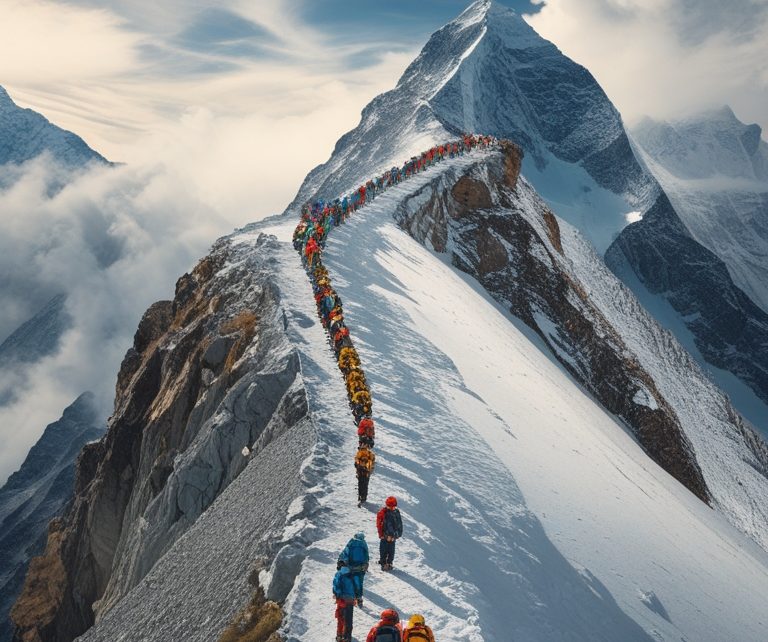
The most pressing story for mountain climbers today isn’t just about the mountain—it’s about the crowd on it. Images from recent years on Mount Everest are shocking. They show long, snaking lines of brightly colored jackets. Mountaineers wait for hours just below the summit. This isn’t a queue for a rollercoaster. This is in the “Death Zone,” above 26,000 feet. Here, the human body is literally dying minute by minute due to lack of oxygen.
This overcrowding creates a perfect storm of danger. Summit seekers exhaust their limited oxygen supplies while waiting. The risk of frostbite skyrockets. Exhaustion turns minor mistakes into fatal ones. The 2019 season was a tragic example. Multiple deaths were partly attributed to these bottlenecks.
As reported, the issue has forced a hard look at how climbing is managed on the world’s most famous peak. Nepalese authorities have tried new rules. They now require climbers to bring back their own waste. They must use tracking chips. They must prove they have more experience. But with the dream of the summit driving hundreds each spring, enforcement is a constant battle.
The BBC poignantly asks if the mountain can physically and ethically cope with this human pressure. The answer, right now, is unclear. For every **mountain climber** ticking a goal off their list, the environmental toll grows. Tons of abandoned tents, empty oxygen canisters, and human waste freeze into the landscape. It is a stark reminder of the sport’s footprint.
Key dangers of summit traffic jams include:
- Depleted oxygen bottles, leading to hypoxia.
- Increased exposure to extreme cold, raising frostbite risk.
- Critical delays in descending from the Death Zone.
- Massive environmental damage from accumulated waste.
The Ethics Revolution: From Conquest to Stewardship
The crowding crisis has sparked a soul-searching revolution. The classic idea of the climber as a lone hero “conquering” a virgin peak feels outdated. Today, a powerful new ethic is taking hold: stewardship. The conversation among leading mountain climbers is shifting toward sustainable and ethical climbing.
What does ethical climbing mean in practice?
It means following Leave No Trace principles religiously. This involves packing out every single piece of garbage. It means managing human waste responsibly. On peaks like Denali, using portable toilet systems is required. It means considering the carbon footprint of flying to remote ranges. Mountaineers are now finding ways to offset it.
But it goes deeper. It’s about respecting sacred spaces. Many mountains are spiritually significant to indigenous cultures. The new ethic asks alpinists to learn, acknowledge, and honor that. It’s also about ensuring that the money from climbing expeditions genuinely benefits local communities. The goal is no longer just to take a summit photo. The goal is to leave the mountain, and its people, better than you found them.
As the American Alpine Club frames it, we are moving toward a model of “climbing with conscience.” This philosophical shift is perhaps the most significant evolution in mountaineering history. It transforms the very definition of success for a high-altitude mountaineer.
Tech to the Rescue: The Gadgets Saving Lives on High
In this dangerous, crowded, and ethically complex environment, technology has become a mountain climber’s guardian angel. The days of being utterly alone and unreachable are over. Modern rescue is a ballet of bravery, coordination, and cutting-edge gear.
First, the devices in your pocket. GPS distress beacons (like PLBs or Garmin inReach devices) are now standard kit. With the push of a button, a climber can send an SOS. The beacon sends their exact coordinates to a global satellite network. This can trigger a rescue mission from halfway across the world. Specialized apps can turn smartphones into emergency beacons even without cell service.
Then, look to the skies. Drones are being used for reconnaissance. They allow rescue teams to scope out an injured climber’s location without risking more lives. They can even deliver small, critical supplies like medicine or an extra radio.
But the most jaw-dropping tech is in the cockpit. High-altitude helicopter rescues are feats of incredible skill. Pilots specially trained for “hovering at the limit” perform maneuvers in air so thin it can barely support the aircraft. In the Himalayas and the Alps, these pilots are the last, best hope for climbers stricken with illness or injury.
As National Geographic explores, this technology is transforming survival odds. Yet, as they note, when the drone’s camera pulls back, you see the human heart of the rescue. You see the guide who climbs down an icy cliff to secure a victim. You see the Sherpa team carrying a stretcher over a treacherous crevasse field. Technology opens the door, but human courage walks through it. https://www.nationalgeographic.com/adventure/article/140926-everest-deaths-rescues-climbing-sherpas-nepal-himalaya
Essential modern climbing technology includes:
- Personal Locator Beacons (PLBs) and satellite messengers.
- Lightweight, high-performance weather forecasting apps.
- Advanced thermal clothing and heated gear.
- Drones for route scouting and emergency supply delivery.
The Hidden Cost: What the Summit Takes to Keep
Reaching the top of the world comes with a price tag far beyond money. The physical and mental toll on mountain climbers is a story often told in whispers after the celebration dies down.
Physically, the dangers are acute. They include:
- Acute Mountain Sickness (AMS): The debilitating headache and nausea that can affect anyone.
- High-Altitude Pulmonary Edema (HAPE): A life-threatening condition where the lungs fill with fluid.
- High-Altitude Cerebral Edema (HACE): A deadly swelling of the brain.
But science is now revealing the long-term effects. Repeated exposure to extreme altitude starves the brain of oxygen. This can lead to persistent cognitive deficits. These are small but noticeable impacts on memory, attention, and processing speed. The wear on joints and the cardiovascular system from carrying massive loads can also last a lifetime.
Perhaps even more profound is the mental and emotional toll. After months or years of training and hyper-focused effort, standing on the summit can be an anticlimax. Then comes the crash. Post-expedition depression is very real. Climbers return to a “normal” life that feels flat and meaningless. The stress of near-death experiences can haunt them. The pressure to perform for sponsors or social media followers adds a crushing layer of anxiety.
Publications like ExplorersWeb and Outside Online are bravely bringing these stories into the light. They show that for many mountain climbers, the hardest climb is often the one back into everyday life. The summit victory can come with a hidden ledger of psychological debt.
The Unsung Heroes: Sherpas and the Fight for Equity
Any honest discussion about modern mountain climbers on Himalayan peaks must center on the Sherpa community. To call them “support staff” is a gross understatement. They are the elite athletes, the engineers of the mountain, and its undeniable heart.
They perform the most dangerous jobs. They “fix” the routes with miles of rope that all other climbers will use. They carry immense loads to stock high camps. They guide clients through the most technical sections. They do this with a skill and acclimatization that often surpasses the foreign climbers they assist. Tragically, they also bear the greatest risk. They account for a disproportionate number of fatalities on peaks like Everest.
For decades, this vital work came with inequitable pay, scant recognition, and inadequate life insurance. But a powerful change is underway. There is a concerted push for better wages, true insurance policies, and representation in the organizations that make the rules.
Most excitingly, there is a move toward ownership. Sherpas are forming their own guiding companies. As The Alpinist magazine powerfully reports, the conversation is about moving from being seen as hired help. The goal is to be recognized as rightful partners and leaders in the mountaineering world. The future of sustainable, ethical climbing in the Himalayas depends on this evolution.
The next generation of Sherpas is educated, connected, and demanding a seat at the table. The entire climbing world is better for it. Their fight for equity is reshaping the economics and ethics of high-altitude mountaineering. https://www.thealpinist.com/
The Summit Ahead: A More Conscious Climb
So, what does the future hold for mountain climbers? It is a future that demands more. More preparation, more respect, more consciousness. The era of treating the planet’s highest places as mere trophies is ending.
The climbers of tomorrow will need to be part-environmentalist, part-advocate, and part-guest. They will choose operators who prioritize safety and fairness. They will train not just their bodies but their ethics. They will see a successful expedition not just by whether they stood on top. Success will be measured by how they treated everyone they met and everything they touched along the way.
The mountains haven’t gotten smaller, but the world has. And with that connection comes responsibility. The thrill of climbing, the raw challenge of human versus nature, will never fade. But now, it’s framed by a new question. The question is not just “Can I climb this mountain?” The new, essential question is “How should I climb this mountain?”
The answer will define the next chapter of adventure. It will guide every mountain climber who looks up at a snowy peak and feels the irresistible call to ascend. The climb, it turns out, is just beginning.