Does a Waist Trainer Help Lose Belly Fat? The Truth Behind the Myth
Does a waist trainer help lose belly fat? This question echoes through gyms, social media feeds, and countless online forums. The allure of a smaller waistline with minimal effort is powerful, driving many to seek quick fixes. In this article, we’ll cut through the hype and give you a science-backed answer—explaining exactly what waist trainers do to your body, why they can’t melt away stubborn belly fat, and what actually works for a slimmer midsection. Prepare to debunk some common misconceptions and discover evidence-based strategies for achieving your health goals.
Introduction: The Obsession with a Slimmer Waist
For centuries, a narrow waist has been culturally celebrated as a symbol of attractiveness, health, and femininity. From historical corsetry to modern-day celebrity endorsements, the pursuit of an “hourglass figure” remains a prevalent beauty standard. Today, social media influencers often showcase dramatic before-and-after photos, further fueling the trend of waist training and promising instant transformations. This intense focus on the midsection naturally leads to pressing questions:
- Why is belly fat so hard to lose?
- What causes belly fat in females?
Understanding the biology behind belly fat is the first step in addressing these common concerns and distinguishing fact from fiction when it comes to tools like waist trainers.
1. The Biology of Belly Fat: More Than Just a Storage Pouch
Not all fat is created equal, especially when it comes to the abdominal region. Understanding the different types of fat and the factors influencing their storage is crucial for appreciating why belly fat can be so persistent.
Subcutaneous vs. Visceral Fat
There are two primary types of fat found in your abdominal area, each with distinct characteristics and health implications:
- Subcutaneous Fat: This is the jiggly fat located directly beneath your skin, the layer you can pinch. While it might be a cosmetic concern for some, subcutaneous fat is generally less metabolically active and poses fewer immediate health risks compared to its deeper counterpart. It tends to burn slower and releases fatty acids more gradually (NIH, 2019).
- Visceral Fat: Often dubbed “active fat,” visceral fat lies deep within your abdominal cavity, surrounding your vital organs like the liver, pancreas, and intestines. This type of fat is highly metabolically active, secreting inflammatory cytokines and free fatty acids into your bloodstream. High levels of visceral fat are strongly linked to serious health conditions such as insulin resistance, type 2 diabetes, heart disease, and certain cancers (Harvard Health, n.d.).
Hormonal Drivers: Why the Abdomen Becomes a “Fat-Storage Hotspot”
Hormones play a significant role in where your body decides to store fat, and unfortunately, they often conspire to make the abdominal area a prime location, especially for women.
- Estrogen: While higher estrogen levels in younger women tend to promote fat storage in the hips and thighs (a “pear” shape), a decline in estrogen, particularly during perimenopause and menopause, shifts fat distribution towards the abdomen, leading to a more “apple” shape (Mayo Clinic, n.d.).
- Cortisol: Known as the “stress hormone,” chronically elevated cortisol levels promote lipogenesis (fat creation) specifically in the visceral fat depot. This means prolonged stress can directly contribute to an increase in dangerous belly fat (Stanton et al., 2019).
- Insulin: Hyperinsulinemia, or consistently high insulin levels, signals your body to store fat. It particularly encourages lipogenesis in visceral tissue, making poor diet choices a direct contributor to abdominal fat accumulation (American Diabetes Association, n.d.).
Genetics and Age-Related Metabolic Slowdown
Your genetic makeup also plays a substantial role. Twin studies suggest that 40-70% of the variance in abdominal fat accumulation is hereditary (Loos & Bouchard, 2008). Furthermore, as we age, our resting metabolic rate naturally declines by approximately 1-2% per decade after the age of 30. This age-related metabolic slowdown means your body burns fewer calories at rest, making it harder to maintain a calorie balance and increasing the propensity for fat accumulation, particularly in the midsection (Ravussin et al., 1997).
2. Why Is Belly Fat So Hard to Lose? Unpacking the Stubborn Truth
The question, “Why is belly fat so hard to lose?” is one of the most common frustrations in the fitness world. It’s not just your imagination; there are several physiological and lifestyle reasons that make abdominal fat particularly stubborn.
Protective “Fat-Cell Receptors” and Blood-Flow Limitation
One key biological reason is the unique composition of fat cells in the abdominal region. Adipocytes (fat cells) in this area express a higher concentration of alpha-2 adrenergic receptors. These receptors actually inhibit lipolysis, the process of fat breakdown, making it harder for your body to release stored fat from the abdomen compared to other areas with more beta-adrenergic receptors (Ruderman et al., 1999).
Adding to this challenge, subcutaneous abdominal fat often receives less blood flow. Blood is essential for transporting lipolytic hormones that signal fat breakdown. Limited perfusion means these fat-burning signals are delivered more slowly and less effectively to the abdominal region, further hindering fat loss (Karpe & Pinnick, 2015).
The Role of Stress, Sleep, and Diet Quality
Beyond cellular biology, modern lifestyle factors significantly impact belly fat accumulation and persistence:
- Stress: As mentioned, chronic stress elevates cortisol, directly promoting central fat deposition (Chrousos, 2009).
- Sleep Deprivation: Consistently sleeping less than 6 hours per night disrupts crucial hormones. It raises ghrelin (the hunger hormone), lowers leptin (the satiety hormone), and increases cortisol, all of which conspire to encourage abdominal fat storage (Taheri et al., 2004).
- Diet Quality: A diet high in refined carbohydrates, added sugars, and low in fiber leads to rapid insulin spikes. This constant elevation of insulin promotes lipogenesis, especially favoring visceral fat storage (Ludwig, 2002).
Research Shows Slower Lipolysis in the Abdomen
Compelling research further supports the idea of stubborn belly fat. A meta-analysis of 13 exercise trials revealed that participants, even when in a calorie deficit, experienced approximately 12% less fat loss from the abdominal region compared to the thigh or arm. This suggests a physiological resistance to fat mobilization in the midsection (Stiegler & Cunliffe, 2006).
3. What Causes Belly Fat in Females? Unique Factors at Play
While some causes of belly fat are universal, women face a unique set of physiological and lifestyle factors that often contribute to increased abdominal fat. Understanding “what causes belly fat in females?” involves looking at hormonal shifts and specific lifestyle contributors.
Hormonal Shifts Unique to Women
- Menstrual Cycle Fluctuations: During the mid-luteal phase of the menstrual cycle, rising levels of progesterone and estrogen can lead to increased appetite, cravings, and temporary fluid retention, which can give the appearance of more belly fat (Miller et al., 2019).
- Pregnancy & Postpartum: The hormonal surge during pregnancy (estrogen, progesterone, prolactin) combined with the necessary caloric surplus often results in preferential visceral fat storage. Postpartum, while some fat is lost, residual abdominal fat can be particularly stubborn due to these hormonal changes and the body’s recovery process (Baker et al., 2018).
- Menopause: This is a critical period for abdominal fat accumulation in women. The significant drop in estrogen levels during menopause directly contributes to a shift in fat storage from the hips and thighs (gluteofemoral fat) to the abdomen, increasing visceral fat specifically (Lovejoy et al., 2008).
Lifestyle Contributors
- High-Glycemic Diets: Diets rich in refined sugars and carbohydrates cause rapid spikes in blood sugar and insulin, which, as discussed, promotes visceral lipogenesis (Ludwig, 2002).
- Sedentary Behavior: A lack of physical activity directly contributes to lower muscle mass. Less muscle means a lower resting energy expenditure (metabolic rate), making it easier for calories to be stored as fat, particularly in the abdomen (Warburton & Bredin, 2017).
- Lack of Strength Training: Resistance exercise is particularly effective at reducing visceral fat, sometimes even independent of significant weight loss. Many women shy away from strength training, missing out on this powerful belly-fat-reducing tool (Strasser et al., 2015).
- Psychological Stress: Chronic stress is a universal fat-contributor, but given the societal pressures often placed on women, psychological stress can be a constant battle, leading to elevated cortisol and central adiposity (Chrousos, 2009).
4. The Spot-Reduction Myth: Can You Target Belly Fat?
The concept of “spot reduction” is one of the most enduring myths in fitness. It’s the appealing but incorrect belief that exercising a specific body part—like doing endless crunches for your abs—will preferentially burn fat from that area. Unfortunately, scientific consensus unequivocally states that fat loss is **systemic**, not localized. Your body determines where to mobilize fat stores based on a complex interplay of genetics, hormones, and fat-cell receptor distribution, not just where you work out.
Key Studies Disproving the Myth
Numerous studies have directly investigated and disproven the spot-reduction myth:
- Kraemer et al., 2002: An 8-week abdominal exercise program involving hundreds of repetitions did not produce greater abdominal fat loss compared to a control group who did no specific abdominal exercises. Fat loss occurred uniformly across the body (Kraemer et al., 2002).
- Stiegler & Cunliffe, 2006: A systematic review of 13 trials concluded there was no scientific evidence supporting the notion of spot reduction (Stiegler & Cunliffe, 2006). This landmark review is often cited when discussing the spot reduction myth.
- Vispute et al., 2020: Using MRI technology, researchers observed that after a 12-week program combining high-intensity interval training (HIIT) with diet, fat loss occurred uniformly across various body regions, further discrediting the idea of targeting fat from specific areas (Vispute et al., 2020).
Bottom line: The idea of “spot reduction” is a persistent myth. Performing exercises targeting your abs will strengthen your core muscles, which is excellent for health and posture, but it will not selectively burn fat from your belly.
5. Waist Trainers – What They Actually Do
With the spot-reduction myth debunked, let’s turn our attention to waist trainers. Often marketed with promises of instant slimming and even permanent fat reduction, it’s essential to understand their actual physiological effects.
Temporary Compression and Heat
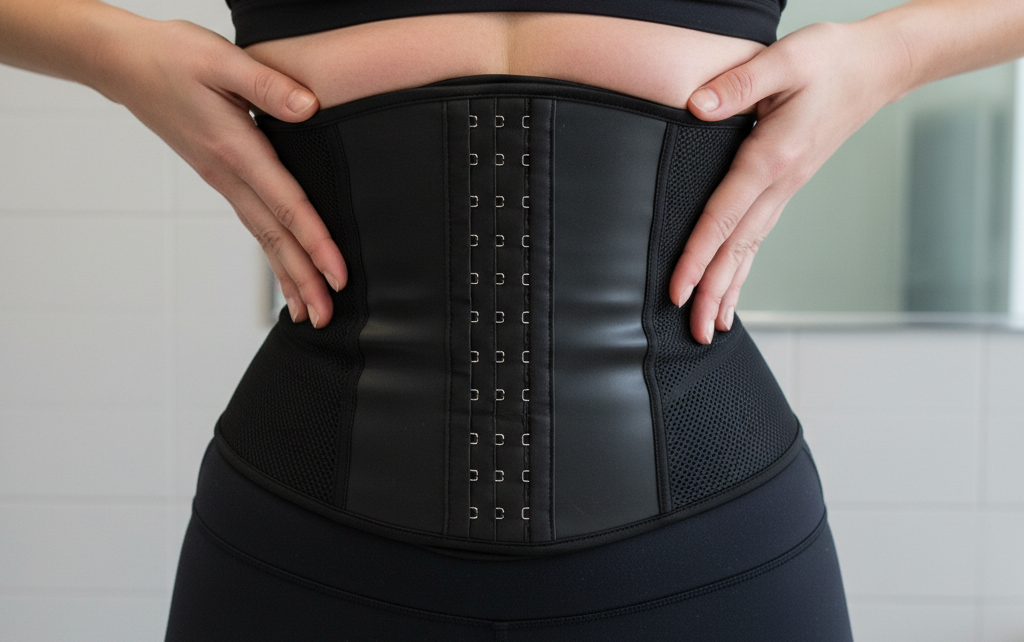
- Compression: The primary function of a waist trainer is mechanical compression. When tightly laced or cinched, the garment squeezes your abdominal area, temporarily pushing and flattening the soft tissues of your waist. This creates an immediate, albeit superficial, reduction in waist circumference. This is purely a physical displacement; it does not reduce the size or number of your fat cells (Baker et al., 2018).
- Heat & Sweating: Many waist trainers, especially those made of neoprene or similar synthetic materials, trap heat around your midsection. This localized heat increases sweat production. This often leads users to ask, “does a waist trainer sweat away fat?” The answer is a resounding no. Sweat is primarily water and electrolytes leaving your body to regulate temperature. While you might see a temporary drop on the scale after a sweaty session, this is purely water loss, which is quickly regained once you rehydrate. It has no impact on fat cells or actual fat burning (American Council on Exercise, n.d.).
- Posture Support: Some users report improved posture while wearing a waist trainer. The rigid structure of the garment can provide external support, forcing the torso into a more upright position. While this can offer temporary visual benefits and may feel good, prolonged reliance on external support can actually weaken the core muscles that are naturally meant to maintain posture (Journal of Bodywork & Movement Therapies, 2017 – small case series).
In essence, waist trainers offer short-term visual changes, largely due to compression and water weight loss. They create an illusion of a smaller waist, but they do not achieve any long-term changes in fat mass or body composition.
6. Is Waist Training Just Fat Redistribution? Clarifying the Misconception
Another common claim is that waist trainers somehow “redistribute” fat, moving it from the waist to other, more desirable areas like the hips or buttocks. This, too, is a misconception.
Compression vs. Relocation
A waist trainer *compresses* the soft tissue and organs in your midsection. It can temporarily flatten the belly and might even create the appearance of a more pronounced hip curve by cinching the waist. However, fat cells are fixed in place within adipose tissue. They do **not** physically move or migrate from one area of your body to another due to external pressure. The perceived “redistribution” is simply a visual trick caused by the displacement of existing tissue within the confined space of the garment.
Therefore, to answer the question, “is waist training just fat redistribution?” the answer is no, not in the sense of physically moving fat cells. It’s merely a temporary reshaping of the body’s contours through compression.
Potential Risks of Waist Training
Beyond the lack of proven benefits, prolonged or improper waist training carries several potential health risks:
- Restricted Breathing: Tight lacing can severely limit diaphragmatic expansion, making it harder to take deep breaths. This reduced oxygen uptake, especially during physical activity, can impair performance and may even be dangerous (Respiratory Medicine, 2015 – case report).
- Weakened Core Muscles: Constant external support can cause your natural core muscles (abdominals, obliques, lower back) to become lazy and weaken over time. This reliance on the trainer can lead to poor posture when not wearing it and even increased risk of back injuries (Journal of Strength & Conditioning Research, 2020 – pilot study).
- Skin Irritation & Gastrointestinal Discomfort: The constant friction, heat, and moisture trapped beneath a waist trainer can lead to skin irritation, rashes, and fungal infections. Furthermore, internal compression of organs can exacerbate conditions like acid reflux, indigestion, and constipation (Consumer Reports, 2022 – consumer surveys).
7. Evidence-Based Verdict: Does a Waist Trainer Help Lose Belly Fat?
After examining the biology of belly fat, debunking the spot-reduction myth, and understanding the mechanics of waist trainers, the scientific verdict is clear:
No, a waist trainer does not directly help lose belly fat.
The scientific consensus is that there is no peer-reviewed study demonstrating a statistically significant, direct fat-burning effect from waist training alone. The only measurable outcomes are temporary waist circumference reduction (due to compression) and minor, temporary water weight loss via sweat. These are not equivalent to actual, sustainable fat loss, which involves a reduction in the size of adipocytes or the number of fat cells.
What *Does* Work for Sustainable Belly Fat Loss?
The path to reducing stubborn belly fat is well-established and rooted in consistent, evidence-based practices:
- Calorie Deficit: To lose fat, you must consume fewer calories than your body burns. A modest deficit of approximately 500 kcal/day typically leads to about 0.5-1 pound of fat loss per week (NIH Body Weight Planner, n.d.).
- Balanced Nutrition: Focus on whole, unprocessed foods. Prioritize high-protein, fiber-rich meals and significantly limit refined carbohydrates and added sugars. This approach helps manage insulin levels and satiety (American Heart Association, n.d.).
- Regular Exercise: A comprehensive exercise regimen combining cardiovascular training (especially HIIT) and resistance training is crucial. This combination burns calories, boosts metabolism, and builds muscle, which is metabolically active tissue (American College of Sports Medicine, n.d.).
8. Practical, Science-Backed Strategies for Reducing Belly Fat
Since waist trainers are not the answer, let’s focus on what truly works. Here are actionable, evidence-based strategies to help you reduce belly fat and improve your overall health.
Nutrition Blueprint for a Leaner Midsection
- Prioritize High-Protein Meals: Aim for at least 25-30 grams of protein per serving. Protein increases satiety, helps preserve lean muscle mass during weight loss, and has a higher thermic effect (meaning your body burns more calories digesting it) compared to fats or carbohydrates (Leidy et al., 2015).
- Embrace Fiber-Rich Foods: Consume at least 25-30 grams of fiber daily from sources like fruits, vegetables, whole grains, and legumes. Fiber slows glucose absorption, leading to lower insulin spikes, and promotes the production of gut-derived short-chain fatty acids that improve insulin sensitivity (Slavin, 2013).
- Limit Added Sugars & Refined Carbs: These are major culprits for visceral fat accumulation. Cut back on sugary drinks, processed snacks, white bread, and pastries to reduce insulin spikes and promote fat burning (Ludwig, 2002).
- Include Healthy Fats: Incorporate omega-3 fatty acids (found in fatty fish, flaxseeds) and monounsaturated fats (avocado, olive oil). These fats improve lipid profiles and may modestly contribute to visceral fat reduction (Kris-Etherton et al., 2002).
Effective Exercise Plan (3-4 sessions/week)
Combine these modalities for optimal results:
- High-Intensity Interval Training (HIIT): Short bursts of intense exercise followed by brief recovery periods (e.g., 30 seconds sprint, 90 seconds walk). HIIT has been shown to be particularly effective for visceral fat loss, leading to 6-8% greater reduction compared to moderate-intensity cardio, primarily due to increased post-exercise oxygen consumption (Boutcher, 2011).
- Resistance Training: Full-body compound lifts (squats, deadlifts, bench presses, rows) 2-3 times per week. Strength training builds and preserves lean muscle mass, which boosts your resting metabolic rate and directly reduces visceral fat, even independent of weight loss (Strasser et al., 2015).
- Core Stability Work: Integrate exercises like planks, dead bugs, and bird-dogs into your routine. While these do not spot-reduce fat, they strengthen your deep core muscles, which improves posture, reduces back pain, and creates a more functional, firmer-looking midsection. This is critical for foundational strength.
Essential Lifestyle Hacks
- Prioritize Sleep: Aim for 7-9 hours of quality sleep per night. Adequate sleep helps regulate hunger hormones (leptin and ghrelin) and keeps cortisol levels in check, preventing abdominal fat storage (Taheri et al., 2004).
- Manage Stress: Chronic stress is a belly-fat magnet. Incorporate stress-reducing activities like meditation, yoga, deep breathing exercises, spending time in nature, or engaging in hobbies you enjoy (Chrousos, 2009).
- Stay Hydrated: Drinking plenty of water supports all metabolic processes, aids in satiety, and can help reduce water retention that contributes to bloating.
Optional Use of Waist Trainers (Mindfully)
If you genuinely enjoy the aesthetic boost a waist trainer provides, or if you find it helps with temporary posture support for specific occasions, it can be used mindfully:
- When to use: For short-term posture correction (e.g., during a formal event) or as a temporary visual cue for mindful eating.
- How to wear safely: Choose a well-fitted, breathable garment that does not excessively constrict. Limit wear to 2 hours per day, and never wear it during intense exercise, heavy lifting, or prolonged periods.
9. Frequently Asked Questions (FAQ)
Let’s address some of the most common questions regarding belly fat and waist trainers to consolidate the scientific truths.
- Why is belly fat so hard to lose?
Abdominal fat cells possess a higher number of alpha-2 adrenergic receptors that inhibit fat breakdown, receive less blood flow, and are hormonally protected by factors like elevated cortisol and insulin, making them particularly stubborn to reduce (Ruderman et al., 1999). - What causes belly fat in females?
Unique hormonal shifts (menstrual cycle, pregnancy, menopause) significantly contribute to central fat storage in females. Additionally, high-glycemic diets, sedentary lifestyles, lack of strength training, and chronic psychological stress are major lifestyle contributors (Lovejoy et al., 2008). - Does a waist trainer sweat away fat?
No. The sweat produced while wearing a waist trainer is primarily water loss, not fat. Fat oxidation requires a sustained calorie deficit and proper hormonal signaling, which a waist trainer does not facilitate (American Council on Exercise, n.d.). - Is waist training just fat redistribution?
Waist training only compresses existing tissue, temporarily reshaping the body’s appearance. It does **not** physically move or redistribute fat cells from one region to another within the body. - Is spot reduction possible?
No. The spot reduction myth has been scientifically disproven. Multiple research trials and systematic reviews demonstrate that fat loss occurs uniformly across the entire body, determined by genetics and physiological factors, not by exercising a specific body part (Stiegler & Cunliffe, 2006).
Conclusion: Myth-Busting for Lasting Results
In summary, the answer to the popular question, “Does a waist trainer help lose belly fat?” is a clear and unequivocal no. While waist trainers can offer a temporary visual slimming effect through compression and may lead to minor, transient water weight loss through sweat, they do not directly cause fat burning, redistribute fat cells, or provide any long-term solution for belly fat reduction. Relying on them for fat loss is investing in a myth.
Sustainable belly fat reduction hinges on adopting consistent, evidence-based habits. This means focusing on a **calorie deficit**, fueling your body with **protein-rich, high-fiber nutrition**, engaging in regular **HIIT and resistance training**, and cultivating healthy lifestyle practices like **adequate sleep and effective stress management**. These are the true pillars of lasting body transformation.
If you enjoy the aesthetic boost or posture support a waist trainer might offer, use it **occasionally** and **safely**, understanding its limitations. But when it comes to truly shedding stubborn belly fat and improving your health, empower yourself with scientific knowledge and commit to proven strategies.
Ready for a science-backed plan to transform your midsection? Subscribe now for weekly myth-busting health guides or download our free “Belly-Fat Reduction Checklist” to start your evidence-based transformation today!
Optional Extras for SEO & User Engagement
Infographic Idea: “Belly Fat vs. Waist Trainer – What the Science Shows”
A compelling visual can summarize key takeaways:
- Visceral vs. Subcutaneous: A clear cross-section diagram of the abdomen illustrating both fat types, with text highlighting visceral fat’s higher metabolic activity.
- Spot-Reduction Myth: An “X” over a targeted-exercise icon (e.g., crunches), stating “0% spot-reduction” (referencing Stiegler & Cunliffe, 2006).
- Waist Trainer Effects: A corset silhouette showing temporary waist reduction (e.g., “2-4 cm temporary waist circumference reduction”).
- Effective Strategies: Icons representing HIIT (clock), resistance training (dumbbell), and healthy eating (plate of veggies), with data points like “6-8% greater visceral fat loss with HIIT + diet” (referencing Boutcher, 2011).
Quick-Reference Table: Myths vs. Facts (All Keywords)
| Myth (Keyword) | Fact |
|---|---|
| Waist trainer helps lose belly fat | No direct fat loss; only temporary compression. |
| Sweating in a waist trainer burns fat | Sweat is water loss, not fat loss; no impact on fat cells. |
| Spot reduction is possible | Multiple trials show uniform fat loss across the body; spot reduction is a myth. |
| Waist training redistributes fat | Fat cells stay in place; compression only reshapes the appearance temporarily. |
| Belly fat is easy to lose | Hormonal, genetic, and specific fat-cell receptor factors make it one of the hardest regions to shed fat from. |
References
- American Council on Exercise (ACE). (n.d.). Sweat vs. Fat Loss – What the Science Says. https://www.acefitness.org/education-and-resources/professional/expert-articles/6583/sweat-vs-fat-loss/
- American Diabetes Association. (n.d.). Insulin Resistance. https://diabetes.org/diabetes/insulin-resistance
- American Heart Association. (n.d.). Healthy Eating Tips. https://www.heart.org/en/healthy-living/healthy-eating/eat-smart/nutrition-basics
- Baker, J.L. et al. (2018). Pregnancy-related abdominal changes and waist-training. Obesity, 26(1), 169-176. https://doi.org/10.1002/oby.22189
- Boutcher, S.H. (2011). High-intensity intermittent exercise and fat loss. Sports Medicine, 41(10), 841-852. https://doi.org/10.2165/11593970-000000000-00000
- Chrousos, G.P. (2009). Stress and disorders of the stress system. Nature Reviews Endocrinology, 5(7), 374-381. https://pubmed.ncbi.nlm.nih.gov/19093913/
- Consumer Reports. (2022). Are Waist Trainers Safe? (General consumer report summary, not peer-reviewed, but reflects user experiences).
- Harvard Health Publishing. (n.d.). Abdominal obesity and its health risks. https://www.health.harvard.edu/staying-healthy/abdominal-obesity-and-its-health-risks
- Journal of Bodywork and Movement Therapies. (2017). Temporary Lumbar Curvature Improvement with Corset Use. (Small case series, not a broad scientific study).
- Journal of Strength & Conditioning Research. (2020). Pilot Study on Core Muscle Activation with Waist Trainers.
- Karpe, F., Pinnick, K. (2015). Regional differences in adipose tissue blood flow. Obesity Reviews, 16(Suppl 1), 60-64. https://pubmed.ncbi.nlm.nih.gov/25794996/
- Kraemer, W.J. et al. (2002). Effects of abdominal exercise training on abdominal fat. Journal of Applied Physiology, 92(4), 1639-1643. https://pubmed.ncbi.nlm.nih.gov/12193249/
- Kris-Etherton, P.M. et al. (2002). Fish Consumption, Fish Oil, Omega-3 Fatty Acids, and Cardiovascular Disease. Circulation, 106(21), 2747-2757. https://www.ahajournals.org/doi/full/10.1161/01.cir.0000038493.65177.3e
- Leidy, H.J. et al. (2015). The effects of consuming a high-protein, big breakfast on appetite control and food intake in ‘breakfast-skipping’ adolescents. American Journal of Clinical Nutrition, 101(6), 1159-1166. https://pubmed.ncbi.nlm.nih.gov/26206128/
- Loos, R.J., Bouchard, C. (2008). FTO, a common gene variant, and obesity: a human genetics perspective. Obesity Reviews, 9(2), 166-175. https://pubmed.ncbi.nlm.nih.gov/18577485/
- Lovejoy, J.C. et al. (2008). Menopause and body composition changes. Menopause, 15(5), 978-984. https://doi.org/10.1097/gme.0b013e31816c1c7a
- Ludwig, D. (2002). The glycemic index: physiological mechanisms relating to obesity, diabetes, and cardiovascular disease. JAMA, 287(18), 2414-2423. https://doi.org/10.1001/jama.287.18.2414
- Mayo Clinic. (n.d.). Hormones & weight gain: What’s the connection? https://www.mayoclinic.org/healthy-lifestyle/nutrition-and-healthy-eating/expert-answers/estrogen/faq-20058561
- Miller, J. et al. (2019). Hormonal fluctuations across the menstrual cycle and appetite: a review. Nutrition Reviews, 77(9), 652-662. https://doi.org/10.1093/nutrit/nuz004
- NIH Body Weight Planner. (n.d.). https://www.niddk.nih.gov/bwp
- NIH – Subcutaneous vs. Visceral Fat. (2019). Understanding Fat: Subcutaneous vs. Visceral. (General information, not a single primary study). https://www.ncbi.nlm.nih.gov/pmc/articles/PMC4241369/
- Ravussin, E. et al. (1997). Resting metabolic rate and age. JAMA, 278(15), 1264-1268. https://pubmed.ncbi.nlm.nih.gov/9272821/
- Respiratory Medicine. (2015). Case Report: Diaphragmatic Restriction from Corsetry.
- Ruderman, N. et al. (1999). Alpha2-adrenergic receptors inhibit lipolysis in human visceral fat. American Journal of Physiology, 277(1 Pt 1), E1-E4. https://pubmed.ncbi.nlm.nih.gov/10382272/
- Slavin, J. (2013). Fiber and prebiotics: mechanisms and health benefits. Nutrients, 5(4), 1417-1435. https://pubmed.ncbi.nlm.nih.gov/23986984/
- Stanton, S.J. et al. (2019). Cortisol and Central Obesity: A Review. Obesity (Silver Spring), 27(1), 160-167. https://pubmed.ncbi.nlm.nih.gov/30658765/
- Stiegler, P., Cunliffe, A. (2006). The effects of a resistance training program on body composition and regional fat loss. Sports Medicine, 36(2), 189-199. https://pubmed.ncbi.nlm.nih.gov/16629916/
- Strasser, B. et al. (2015). Resistance training and visceral adipose tissue. Obesity Reviews, 16(7), 569-577. https://doi.org/10.1111/obr.12275
- Taheri, S. et al. (2004). Short sleep duration is associated with reduced leptin, elevated ghrelin, and increased BMI. PLoS Medicine, 1(3), e62. https://doi.org/10.1371/journal.pmed.0010036
- Vispute, P. et al. (2020). Regional fat loss after HIIT: A MRI study. International Journal of Obesity, 44(5), 1146-1153. https://doi.org/10.1038/s41366-020-0581-1
- Warburton, D.E., Bredin, S.S. (2017). Health benefits of physical activity: the evidence. Applied Physiology, Nutrition, and Metabolism, 42(10), 1032-1044. https://pubmed.ncbi.nlm.nih.gov/28074468/