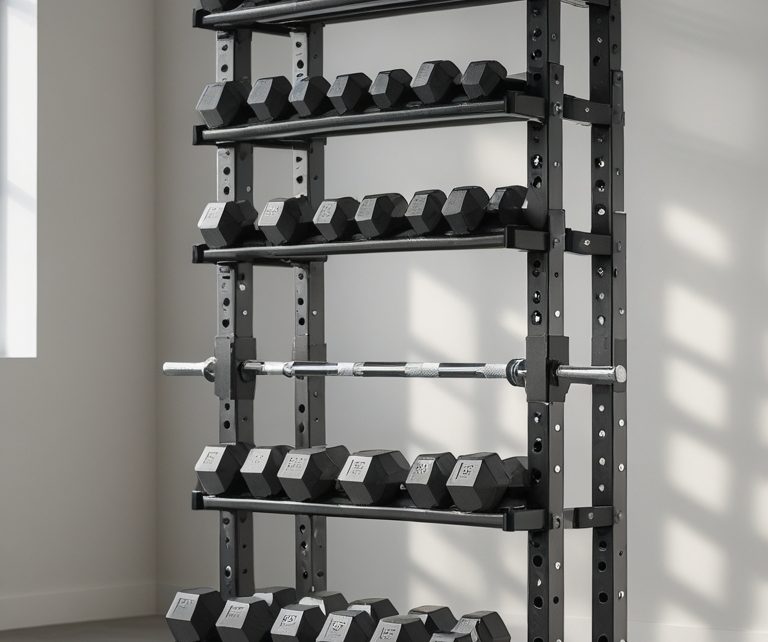
The 3 Tier Dumbbell Rack: Your Ultimate Guide to Dimensions, Capacity & Selection
A scattered collection of weights is the enemy of a great workout. It’s a tripping hazard. It damages your floor. It wastes your precious time.
The single best tool to fix this? A dedicated **3 tier dumbbell rack**. This simple piece of fitness furniture transforms chaos into order, creating a professional, safe, and functional home gym space.
Experts agree. Organization isn’t just neat—it’s foundational for a sustainable and effective training environment [Garage Gym Reviews]. Furthermore, safety is a top reason to get your weights up off the floor [The Spruce].
This guide cuts through the confusion. We will demystify rack types, explain the critical **dumbbell rack dimensions** and **weight rack capacity** specs, and give you a step-by-step blueprint to match the perfect stand to your exact needs. It all starts with understanding the basic configurations.
1. Decoding Rack Types – Tiers, Pairs, and Weight Ranges
First, let’s define a “tier.” In storage, a tier is a vertical level or shelf. A **3 tier dumbbell rack** has three of these levels. More tiers mean more storage in a similar floor footprint. Let’s break down the common types.
The Space-Saver: 2 Tier Dumbbell Rack
A **2 tier dumbbell rack** typically features two open shelves or slots.
- Pros: Extremely space-efficient. It offers excellent visibility and easy access to all your weights.
- Cons: Lower total weight capacity and pair count.
- Ideal For: Small spaces, apartment gyms, or lifters with a limited set (like a basic 5-30lb range).
As seen in product lines from companies like Rogue Fitness, 2-tier models are the go-to for minimalist setups [Rogue Fitness].
The Home Gym Workhorse: 3 Tier Dumbbell Rack
This is the star of the show. The **3 tier dumbbell rack** provides the ideal balance of high capacity and a manageable footprint. It’s designed to comfortably hold a standard, expanding home gym collection.
This configuration is so popular it defines standard sets. When you see a **5-50 lb dumbbell rack** or a **5-75 lb dumbbell rack** for sale, it’s almost always built on a three-tier design [Rep Fitness], [York Barbell].
Many racks are also sold by “pair” count. A **10 pair dumbbell rack** or **15 pair dumbbell rack** commonly uses three tiers. Important note: A “pair” refers to two dumbbells of the same weight. The physical size of a 50lb pair is much larger than a 10lb pair, which affects the needed shelf space.
Max Capacity: The Full Rack of Dumbbells & Beyond
For serious collectors, commercial gyms, or those with **full rack of dumbbells** ambitions, larger units exist.
- These are 4+ tier racks or vertical “ladder-style” stands.
- They maximize vertical space to hold expansive weight ranges (e.g., 5-100lbs or more).
- This is the ultimate weight storage solution for a complete home gym.
2. The Critical Numbers – Dimensions, Capacity, and Fit
Now, let’s get into the specs that matter. This section answers the core questions: What are the **dumbbell rack dimensions**? What does **weight rack capacity** really mean? And, crucially, **how many dumbbells fit on a rack**?
Part A: Demystifying Dumbbell Rack Dimensions
You need to know three measurements: Length (left to right), Depth (front to back), and Height.
- Length: Determines how many pairs you can fit side-by-side.
- Depth: Must accommodate the dumbbell heads. Hex dumbbells need less depth than round ones.
- Height: Affects stability and how many vertical tiers you can have.
Real-World Examples:
- A typical **3 tier dumbbell rack** for a 5-75lb set might measure: 60″ L x 24″ D x 48″ H.
- A compact **2 tier dumbbell rack** might be: 36″ L x 18″ D x 30″ H.
These numbers come from analyzing actual products from manufacturers like Titan Fitness [Titan Fitness].
Critical Advice: Measure your available floor space. Then, add at least 18 inches of clearance in front of the rack for safe loading and unloading.
Part B: Understanding Weight Rack Capacity
There are two capacity specs you must understand: Total Capacity and Per-Shelf Capacity.
- Total Capacity: The combined weight the entire structure can hold. This number is often very high.
- Per-Shelf Capacity (The Important One): The maximum static weight each individual tier can safely hold. This must support the weight of the dumbbells plus the impact force of them being placed back down.
Engineering for this involves standards informed by safety guidelines from bodies like the Consumer Product Safety Commission (CPSC) [CPSC].
Example: A rack with a 1,000 lb per-shelf capacity (common in heavy-duty models from Titan Fitness and others) is built for serious, long-term use. For a home gym, a 500-750 lb per-shelf rating is often robust enough.
Part C: Answering “How Many Dumbbells Fit on a Rack?”
This depends on the size of your dumbbells. Here’s a rule of thumb:
- For standard hex dumbbells, plan for about 10-12 inches of shelf width per pair.
Do the math: A 48-inch long shelf could theoretically fit 4-5 pairs of hex dumbbells. However, remember that heavier weights are larger. On a **5-75 lb dumbbell rack**, the bottom tier holding the 50lb, 60lb, and 70lb pairs may only fit 3 pairs due to their size.
The Best Guide: Always trust the manufacturer’s stated “pair capacity.” They’ve designed the shelf length and depth for a specific range. Visual guides, like those from Fringe Sport, are excellent for seeing real-world loading [Fringe Sport].
Note: Round or urethane-coated dumbbells often require contoured or deeper shelves to prevent rolling.
3. The Selection Blueprint – Matching a Rack to YOUR Gym
Time to apply this knowledge. Follow these steps to find your perfect dumbbell stand.
Step 1: Audit Your Dumbbell Collection
Grab a notepad. List every dumbbell you own by:
- Weight: (e.g., 15lbs, 25lbs, 35lbs).
- Number of Pairs: Total count.
- Physical Shape & Size: Hex or round? Roughly measure the width of one dumbbell head.
- Future Purchases: Plan to add 5-100lbs? Note your goal range.
Step 2: Measure Your Space Precisely
Re-measure your floor space. Consider permanent obstacles (walls, poles, other equipment). Remember the 18+ inch clearance zone in front. As Garage Gym Reviews advocates, “measure twice” to buy once [Garage Gym Reviews].
Step 3: Cross-Reference and Choose Your Configuration
Use this text-based flowchart:
- Small collection (< 10 pairs) in a tight space? → A 2 tier dumbbell rack is likely your best fit.
- Standard collection (10-15 pairs) with a dedicated corner? → The 3 tier dumbbell rack is your sweet spot. This handles a 5-50 lb dumbbell rack or 5-75 lb dumbbell rack set perfectly.
- Large or rapidly expanding collection with ample vertical space? → Consider a full rack of dumbbells (4+ tier) or planning for multiple 3-tier units.
The weight range you own (or want) is the biggest factor in determining the required rack size and sturdiness.
4. Buying Guide – What to Look For Beyond the Specs
Specs tell part of the story. Here are the final features to scrutinize before you buy.
Material & Build Quality
Steel gauge matters. Lower gauge numbers mean thicker, stronger steel.
- 11-12 Gauge Steel: Commercial-grade. Ultra-durable and overbuilt for nearly any home gym.
- 14-16 Gauge Steel: Standard for quality home-use racks. More than sufficient for most collections. Durability like this is a key part of expert evaluations [Wirecutter].
Stability & Safety Features
A wobbly weight stand is dangerous. Look for:
- A wide base and low center of gravity.
- Bolt-down options (for permanent installation on concrete).
- Positive reviews that mention stability. Video reviews, like those from Coop at Garage Gym Reviews, often demonstrate shake tests [Garage Gym Reviews YouTube].
Finish and Durability
A powder-coated finish is superior to standard paint. It resists rust, chipping, and scratches much better, keeping your rack looking new.
Future-Proofing Your Purchase
The best advice is to buy for your future self. Choose a rack with 20-30% more capacity and pair rating than you currently need. This allows your collection to grow without needing a new stand. This “buy once, cry once” philosophy is common in expert guides [Bodybuilding.com].
When you weigh all these factors—build, safety, finish, and room to grow—the well-chosen **3 tier dumbbell rack** consistently emerges as the best value and most practical utility stand for the committed home athlete.
Conclusion: Your Foundation for a Better Gym
Choosing the right dumbbell rack is a strategic decision. We’ve walked through understanding tiers, decoding critical **dumbbell rack dimensions**, applying **weight rack capacity** specs, and using a personal audit to guide your choice.
The outcome is worth it: an organized, safe, and inspiring gym space that encourages consistent training. Your weights become a professional-grade training tool, not clutter.
Your Call to Action: Use this guide. Trust your measurements. Audit your collection. Invest in the rack that transforms your workout area. Start your search with confidence, knowing exactly what you need in a **3 tier dumbbell rack** or the perfect alternative for your space.