Maximize Space, Safety & Success: The Definitive Guide to Commercial Gym Storage Solutions
Your choice of commercial gym storage solutions is a direct investment in your business’s future. It is not just about tidying up; it’s a strategic pillar that holds up safety, member satisfaction, and daily operations. A cluttered floor is a liability. An organized gym is an asset. This guide will provide the actionable blueprint you need to transform your facility’s organization from an afterthought into a competitive advantage.
Proper fitness facility organization impacts three critical areas: Safety, Member Experience, and Operational Efficiency. According to the National Strength and Conditioning Association (NSCA), a clean, orderly environment is a core professional standard and a non-negotiable safety requirement. A haphazard layout with misplaced equipment creates trip hazards and increases the risk of injury for everyone. https://www.nsca.com/education/continuing-education/facility-safety/
Common pain points include the infamous “dumbbell cemetery,” cardio accessories scattered like confetti, safety hazards from rogue weight plates, and an overall unprofessional look that can drive members away. The solution is a systematic approach. We will walk through auditing your needs, selecting commercial-grade systems, integrating storage into your design, and tailoring everything to your specific gym model.
Step 1: The Foundational Audit – Assessing Your Storage Needs & Challenges
You cannot fix what you do not measure. The first step toward superior gym equipment organization is a brutally honest audit of your current state. This is not a quick glance. It is a structured analysis of your entire fitness facility organization. Skip this, and you risk buying the wrong gear for your real problems.
Begin by mapping member traffic and workflow. Identify high-traffic “hot zones” (like the dumbbell area) and bottlenecks where equipment naturally piles up during peak hours. Watch where congestion forms.
Next, categorize every piece of equipment. Create a detailed inventory list by type and usage frequency:
- Free Weights: Dumbbells, barbells, weight plates, kettlebells.
- Cardio Accessories: Dumbbells, barbells, weight plates, kettlebells.
- Functional Training Gear: Medicine balls, slam balls, resistance bands, battle ropes, sleds.
- Accessories & Personal Items: Foam rollers, yoga mats, belts, member bags.
Finally, pinpoint your specific pain points. Is it the chaotic 15-minute transition between group classes? Are bars constantly leaning against walls and getting warped? Is your floor a tripping hazard? Be specific.
This audit must be rooted in your business model. As highlighted by the International Health, Racquet & Sportsclub Association (IHRSA), understanding member usage patterns and your gym’s unique operational model (big-box vs. boutique) is the essential foundation for all storage decisions. A high-volume health club has vastly different needs than a personal training studio. https://www.ihrsa.org/publications/club-business-international/
Step 2: Selecting Core Commercial Storage Systems – Built for Durability
With your audit complete, you can now select storage built to last. Commercial facilities demand commercial-grade solutions. Residential racks and flimsy shelving will fail, costing you more in replacements and repairs.
A. Commercial Weight Rack Systems (The Backbone)
Commercial weight rack systems are the workhorses of gym organization. Look for construction that can withstand tons of weight and constant use, day after day.
Construction Standards: True commercial-grade means 11-gauge or heavier (like 7-gauge) steel, reinforced uprights, and high-quality bushings or sleeves. This ensures stability and longevity.
Types & Uses:
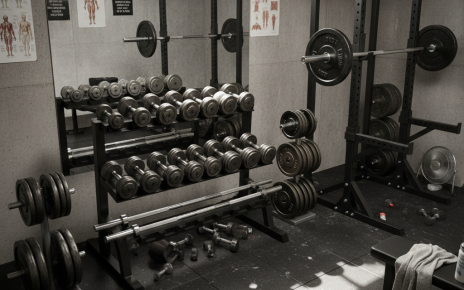
- Vertical Plate Trees: Space-efficient for storing weight plates. They keep plates off the floor and organized by size.
- Horizontal Plate Storage: Offers easier access for heavy 45lb plates. Often built into a cart or low-profile rack, reducing the need to lift plates from a high peg.
- Dumbbell Racks: Feature angled shelves for easy visibility and re-racking. They must have clearly labeled weight increments to encourage proper organization.
- Kettlebell Stations: Dedicated trees or racks with stable, sized slots that securely hold each bell, preventing rolling and damage.
Leading manufacturers like Rogue Fitness and Sorinex set the industry standard for this level of commercial durability. Their product specifications are the benchmark for what a professional facility should use. https://www.roguefitness.com/storage-organization | https://www.sorinex.com/collections/storage
B. Mobile & Wall-Mounted Solutions (Maximizing Flexibility)
Flexibility is key in a dynamic gym environment. Mobile and wall-mounted units are essential for adaptive gym equipment organization.
- Mobile Storage Carts: Perfect for medicine balls, kettlebells, foam rollers, and class equipment. They allow staff to quickly reconfigure the floor for group training, workshops, or special events, then wheel everything away to reset the space.
- Wall-Mounted Rigs & Panels: Systems like the Rogue Infinity or Sorinex Jungle Gym are game-changers. They free up precious floor space and provide incredibly versatile fitness center storage for barbells, attachments, ropes, bands, and accessories. This turns empty wall space into a highly functional organization hub.
C. Specialty & Model-Specific Storage
Different gym models have unique demands. Your storage must reflect your specialty.
- For CrossFit Gym Storage: Think extreme durability and high capacity. Equipment is shared, cycled rapidly, and often dropped. Storage needs to handle sleds, ropes, plyo boxes, and a wide array of specialty bars. The storage area in a CrossFit box is a central, heavily used hub.
- For Boutique Gym Equipment Storage: Aesthetics are paramount. Storage must integrate seamlessly into the design—think custom cabinetry, specific color powder-coat finishes, and compact multi-functional units. The goal is to maintain a premium, curated look while keeping all necessary gear impeccably organized and out of sight when not in use.
Step 3: Integrating Storage into Your Gym Floor Layout Design
Storage should be “designed in, not added on.” Your gym floor layout design must intentionally use storage units to guide member flow, define workout zones, and enforce safety. This is where fitness facility organization becomes strategic.
The core principle is zoning. Use large, sturdy storage units to create natural boundaries. Placing a comprehensive dumbbell rack and adjacent plate storage creates a clear “strength island.” Use storage carts or rigs as visual and physical barriers to separate a loud, high-energy turf lane from a quiet stretching or mobility zone.
Proximity is everything for workflow. Store equipment exactly where it is used. Medicine ball storage should be next to the turf or slam wall. Resistance bands should hang near the warm-up area. This minimizes “equipment migration” across the gym and intuitively encourages members to re-rack items in the correct spot.
Above all, storage placement must prioritize pathway safety. Clear, wide, and clutter-free aisles are non-negotiable for preventing accidents and ensuring accessibility. The American Council on Exercise (ACE) emphasizes that an efficient and safe workout environment is foundational to member success and retention. Intentional storage placement is a key tactic in achieving this. https://www.acefitness.org/resources/professional-expert-articles/
Step 4: Tailoring Solutions to Specific Facility Types
A one-size-fits-all approach fails in fitness. Your facility type dictates your primary storage priorities and product choices.
A. Personal Training Studio Setup
In a personal training studio setup, space is premium, and the experience is highly curated. Storage must be compact, multi-functional, and instantly accessible for the trainer. Think wall-mounted systems with all tools within arm’s reach of the coaching spot. A mobile cart with a flat top can serve as a desk for a tablet, a spot for supplies, and even a makeshift workout bench. Discreet cabinets are essential for storing client files, towels, and retail items like supplements. The space must appear pristine and effortlessly adaptable between sessions.
B. Big-Box Health Club Equipment Storage
For health club equipment storage, the keywords are durability and clarity. Storage must withstand constant, high-volume use by hundreds of members daily. Focus on ease of access and intuitive, foolproof organization for member self-service. Dumbbell racks must be perfectly ordered and labeled. Plate storage must be straightforward. The system should simplify the nightly staff reset routine, making it quick to tidy the entire floor. Massive capacity and rock-solid construction are non-negotiable here.
C. CrossFit Gym Storage (Revisited)
As a community-driven, high-intensity model, CrossFit gym storage needs are distinct. Equipment is often communal and cycled through workouts at high speed. Storage must be incredibly rugged (think 7-gauge steel), have high capacity for numerous bars and plates, and accommodate odd-shaped items like sleds, ropes, and giant tires. The storage zone is often a central, active part of the box’s layout, not a peripheral area.
D. Boutique Gym Equipment Storage (Revisited)
Boutique gym equipment storage is where form meets function. The storage solutions themselves must enhance the brand’s curated, premium ambiance. This could mean custom-colored racks that match the studio’s logo, sleek cabinets that hide all clutter, or beautifully designed wall panels that store equipment as artfully as it is used. As noted in industry analyses by sources like Club Industry, successful boutiques use every element of design—including smart storage—as a competitive advantage to enhance the client experience and justify premium pricing. https://clubindustry.com/topics/facilities
Step 5: Implementation, Protocols, and Measuring ROI
Purchasing the right commercial gym storage solutions is only half the battle. Proper implementation and ongoing protocols ensure your investment pays off for years, solidifying your fitness facility organization.
Create a Phased Implementation Plan: Based on your audit, create a priority list. Address the highest-traffic, highest-risk areas first (e.g., free weight zone before the stretching area). Budget for quality over quantity, adding systems phase by phase if needed.
Establish Unbreakable Protocols:
- Staff Duties: Implement a daily “reset” checklist. Staff should walk the floor at designated times to re-rack stray equipment, wipe down storage units, and ensure all zones are safe and organized.
- Member Education: Culture starts on day one. Include storage etiquette in member onboarding. Use clear, simple signage. Most importantly, trainers and staff must consistently model the behavior by always re-racking their own equipment.
Measuring the ROI of Your Storage Investment: Frame the return in tangible, business-centric terms:
- Asset Protection: Quality storage prevents expensive equipment damage. Dumbbells aren’t dropped on concrete; bars aren’t warped from leaning; urethane equipment isn’t scuffed and torn.
- Risk Reduction: A consistently clear floor minimizes trip-and-fall hazards. This can directly lead to lower liability insurance premiums over time.
- Space Utilization: Efficient storage effectively increases your usable workout square footage. This can allow you to accommodate more members or add additional revenue-generating equipment.
- Member Retention & Acquisition: A professional, organized, and safe environment significantly boosts member satisfaction and pride. It becomes a key point of differentiation in marketing and tours.
As discussed in operational resources like Athletic Business, these factors directly impact the bottom line, turning storage from a cost center into a value driver for savvy facility managers. https://www.athleticbusiness.com/category/facility-management
Conclusion: The Hallmark of a Professional Facility
Implementing the right commercial gym storage solutions is a definitive sign of a professional, member-focused operation. The journey is clear: Conduct a thorough audit of your needs. Select storage systems built with commercial durability in mind. Intentionally integrate them into your gym’s layout and workflow. Tailor every choice to your specific facility model, whether it’s a personal training studio, a health club, or a specialized boutique.
This systematic approach transforms storage from a persistent, nagging problem into a powerful, silent partner in your success. It safeguards your members, protects your equipment investment, streamlines your operations, and elevates your brand’s perception. In the competitive fitness industry, that level of intentional organization isn’t just nice to have—it’s a foundational investment in your facility’s safety, reputation, and long-term profitability.