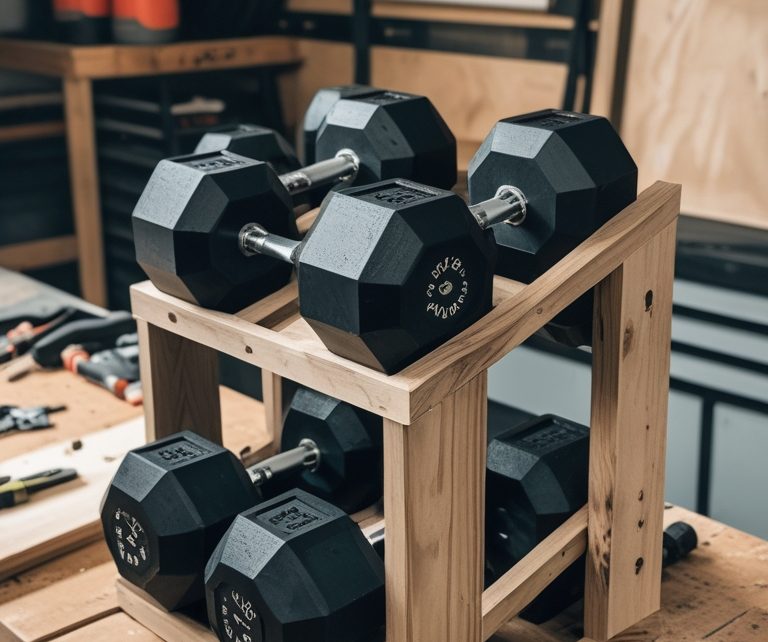
DIY Dumbbell Rack Plans: Build Your Own Gym Storage on a Budget
Is your home gym a cluttered mess? Do your dumbbells live permanently on the floor, creating a tripping hazard and wasting valuable workout space? You’re not alone. A 2023 “Home Fitness Landscape” report found that organization is a top-3 concern for home gym users. Commercial racks are often bulky, expensive, and don’t fit your unique space or set.
The perfect solution? Building it yourself. This guide provides complete, detailed diy dumbbell rack plans. Creating your own homemade dumbbell storage is cost-effective, deeply satisfying, and gives you total control. It connects you to the thriving maker culture, where personalized, functional projects reign supreme. We’ll cover everything from planning and material choice to step-by-step builds and crucial safety, empowering you to build your own dumbbell rack and conquer the clutter for good.
Choosing Your Plan: Wood, PVC, or Hybrid?
Before you buy a single screw, you need a plan. Rushing in leads to wobbly racks and wasted money. Answer these three questions first to choose the right diy dumbbell rack plans for you.
Key Planning Questions
1. Space: Don’t just measure the rack’s footprint. Measure “swing space”—the area needed to safely pick up and put down weights. A common mistake is building a storage unit that’s too snug against a wall or other equipment.
2. Weight Capacity: This is critical. Add up the total weight of your entire dumbbell set. Then, add a 25-50% margin for future growth. This total dictates your material choice and design. A rack for 200 lbs of weight needs a different approach than one for 800 lbs.
3. Budget & Skill Level: Be honest about your tools, skills, and wallet. We’ll explore options ranging from cheap dumbbell storage ideas using upcycled materials to more advanced, furniture-grade builds.
Design Archetypes Compared
There are three main paths for your homemade weight rack. Let’s break down the pros and cons of each.
Wood Dumbbell Rack Plans (The Classic)
Pros: This is the gold standard for sturdiness and aesthetics. Wood racks are incredibly strong, can handle massive loads, and can be sanded, stained, or painted to match your space. They are highly customizable for any dumbbell size or configuration.
Cons: Requires more tools (like a saw and drill) and basic woodworking knowledge. Material cost can be higher than PVC, though still far below commercial units. It’s also less modular; changing the design after assembly is difficult.
Best For: Permanent diy gym storage solutions, heavy hex dumbbell sets, and anyone wanting a sturdy, furniture-quality look. According to woodworking authorities, a well-built frame using 3/4″ plywood and standard 2×4 lumber with proper joinery can easily hold 500+ pounds. URL: Common woodworking engineering principles from sources like The Wood Database.
PVC Dumbbell Rack (The Modular)
Pros: Lightweight, very inexpensive, and incredibly easy to assemble. You often need no tools beyond a PVC cutter or saw. It’s perfect for renters—you can disassemble and move it easily. It’s the ultimate simple dumbbell rack build.
Cons: Not ideal for very heavy individual dumbbells (over 50 lbs each). Long spans can flex under load, and it has a more utilitarian, less premium look than wood.
Best For: Standard rubber-coated dumbbell sets, apartments, budget builds, and people who value adjustability. Data from the Plastic Pipe Institute shows Schedule 40 PVC has excellent compressive strength, making it suitable for vertical loads in a rack design, though its rigidity is lower than wood. URL: Plastic Pipe Institute (PPI) design guides on PVC material properties.
Hybrid & Cheap Dumbbell Storage Ideas
On an extreme budget? Get creative. Upcycle a old bookshelf by reinforcing the shelves with extra braces. Build a simple two-tier rack from cinder blocks and sturdy wooden planks. A reinforced pallet can be stood on its end to create slots for weights. Durability varies widely with these cheap dumbbell storage ideas, so always over-engineer and test carefully.
The DIY Dumbbell Rack Shopping List
Now, let’s gather what you need. A successful project starts with the right gear. This is your first tangible step to build your own dumbbell rack.
Universal Tool Checklist
You likely have many of these already. For a safe and precise build, ensure you have:
- Essential Tools: Tape Measure, Pencil, Carpenter’s Level, Saw (hand saw, circular saw, or miter saw), Drill/Driver, Drill Bits (including countersink bits), Screws (2.5″ to 3″ deck screws are versatile).
- Critical for Safety: Stud Finder. If your rack will be tall or hold significant weight, anchoring it to the wall is non-negotiable. The U.S. Consumer Product Safety Commission (CPSC) highlights tipping hazards for heavy furniture and storage units. URL: CPSC furniture tip-over hazard guidance and data.
- Highly Recommended: A Kreg Jig for easy, strong pocket-hole joinery in wood projects. Sandpaper or a Power Sander. Clamps (they act as a third hand).
Material Lists by Design
For Wood Dumbbell Rack Plans:
- Lumber: 3/4″ thick plywood (Baltic birch is strong and has smooth edges) for shelves. 2×4 lumber (or 2×3 for lighter sets) for the structural frame.
- Fasteners: 2.5″ and 3″ wood screws. 1.25″ pocket-hole screws if using a Kreg Jig.
- Tip: For better quality wood and often cheaper cuts, check a local lumberyard instead of a big-box store.
For PVC Dumbbell Rack Plans:
-
- Piping & Fittings: Schedule 40 PVC pipe (1.5″ diameter is common and sturdy). PVC fittings: “T” connectors, 90-degree elbows, and possibly couplers.
Cement: PVC solvent cement for permanent bonds. (Optional: For a friction-fit, adjustable rack, you can skip the cement).
- Tip: Buying a pre-cut pack of PVC pipes can save time and ensure consistent lengths.
How to Build a Dumbbell Rack: Two Proven Methods
Here are two detailed, step-by-step guides. Choose the one that matches your chosen design from the planning phase.
Wooden Wonder: A Sturdy, Classic Rack
We’ll use the excellent, free “Simple Dumbbell Rack” plan by Ana White as our foundation. This is a fantastic starting point for a sturdy, two-tiered wooden weight organizer. URL: https://www.ana-white.com/woodworking-projects/simple-dumbbell-rack
Enhanced Build Steps:
- Review & Adapt the Plan: Print the plan. The most crucial step is to double-check the shelf spacing and overall dimensions against *your* dumbbells. Measure your largest dumbbell’s diameter and height. Adjust the plan’s measurements if needed.
- Cutting with Precision: Mark all your cuts clearly. Use a speed square to ensure lines are perfectly straight. For the cleanest cuts, use a circular saw with a guide or a miter saw. Cut all 2×4 frame pieces and plywood shelves to size.
- Assembly & Joinery: Start by building the two side “ladders” (the front and back legs with shelf supports). Using a Kreg Jig to create pocket holes for your screws is the easiest way to get strong, hidden joints. Always pre-drill holes when screwing near the end of a board to prevent the wood from splitting.
- Adding Shelves & Reinforcements: Attach the plywood shelves to the supports. For critical anti-sway stability, add a rear cross-brace (a diagonal 2×4) or attach a full sheet of 1/4″ plywood to the back of the rack. This transforms it from a wobbly frame into a rigid, box-like structure.
- Final Prep: Sand every edge and surface you might touch, especially the shelf edges. This prevents splinters and gives a professional feel.
PVC Power: A Lightweight, Modular System
For this build, we reference the popular “No-Tools” PVC Dumbbell Rack guide from DIYActive, adapting it for maximum stability. URL: https://www.diyactive.com/pvc-dumbbell-rack/
Enhanced Build Steps:
- Dry Fit First: Assemble the entire rack according to your design using just friction-fit connections (no glue). This lets you test the dimensions, ensure all dumbbells fit, and make adjustments before anything is permanent.
- Permanent Assembly (Optional): If you’re happy with the design and want maximum rigidity, use PVC solvent cement. Apply primer (if required) and cement to the inside of the fitting *and* the outside of the pipe. Quickly push and twist the pipe into the fitting, holding it steady for 15-30 seconds. Warning: This bond is permanent and sets fast.
- Stability Enhancements: PVC racks can be top-heavy. To prevent tipping, design a wider base. You can also create an “A-frame” style where the sides angle out slightly at the bottom. For a wall-adjacent rack, consider securing the top rear crossbar to a wall stud with a heavy-duty pipe strap.
- Weight Test: Load your dumbbells onto the rack gradually. Start with the lighter ones, then add the heavier ones over a day. Watch for any significant bowing in the long horizontal pipes or stress at the joints.
Secure, Finish, and Personalize Your DIY Weight Rack
Building the structure is only 80% of the job. The final 20%—safety and finishing—is what makes your project last and look professional.
Non-Negotiable Safety Protocol
Your homemade dumbbell storage must be safe. Follow these rules:
- Wall Anchoring is Mandatory: As highlighted by the CPSC, any freestanding rack over 3 feet tall or holding more than 150 pounds total must be anchored to the wall. Use a stud finder to locate wooden wall studs. Secure the top of your rack to the studs using heavy-duty 3″+ lag bolts or furniture anchoring kits. This prevents a deadly tip-over.
- Progressive Load Testing: Don’t slam all your weight on at once. Load the rack over 24-48 hours. Listen for creaks, watch for sway, and check that all joints remain tight.
- Floor Protection & Stability: Place your rack on a rubber stall mat, a piece of plywood, or a low-profile platform. This widens the footprint, protects your flooring from dents and scratches, and adds a non-slip base.
Finishing Touches for Durability & Function
For Wood Racks: Apply a durable finish. A few coats of polyurethane or a hardwearing enamel paint will protect the wood from sweat, moisture, and dings. As recommended by finishing experts, lightly sand between coats for a smooth result. URL: Finishing advice from brands like Minwax and pros like Bob Vila.
For All Racks: Protect your dumbbells and reduce noise. Line the wooden shelves or PVC rails with rubber channel liner (for pipes), split foam pipe insulation, or adhesive felt pads. This is a cheap upgrade with high value.
Customization Ideas
Make it truly yours. Add label holders on the front edge of each shelf to mark weight sizes. Install heavy-duty locking casters for mobility (ensure the rack is anchored when in use!). Add a third tier for smaller plates or accessories. Use your gym’s colors for paint on a wood rack. Your diy gym storage should work for you.
Conclusion: Your Organized Gym Awaits
You’ve journeyed from cluttered frustration to having a clear, actionable path. We’ve covered the essential planning phase, compared robust wood dumbbell rack plans to flexible pvc dumbbell rack designs, walked through detailed builds, and stressed vital safety and finishing steps.
The value goes beyond saving money. You gain the deep satisfaction of using something you built with your own hands. You create perfect, customized homemade dumbbell storage that no store could sell you. You become part of the empowered DIY movement, taking control of your space.
Your call to action is simple. Pick your plan, gather your tools, and start building. Follow the safety protocols to ensure your gym is both organized and safe. Then, step back and admire your work. With these diy dumbbell rack plans, you’re ready to build your own dumbbell rack and conquer gym clutter for good.