Building a home gym means making tough choices about space and budget. One of the biggest debates for leg day enthusiasts is choosing the right machine: Horizontal Leg Press vs 45 Degree Leg Press. Both machines target your quads, hamstrings, and glutes, but they do it in very different ways.
If you have lower back pain, limited ceiling height, or a need for massive load capacity, picking the wrong one can be a costly mistake. In this comprehensive guide, we break down the mechanics, safety, footprint, and price of each to help you decide which leg press belongs in your home gym in 2025.
Quick Comparison: Horizontal vs. 45 Degree
| Feature | Horizontal Leg Press (Seated) | 45-Degree Leg Press (Linear) |
|---|---|---|
| Best For | Beginners, Rehab, Back Safety | Bodybuilders, Max Strength |
| Footprint | Longer, Lower Profile | Taller, Often Wider |
| Weight Capacity | Usually Lower (Stack or Plate) | Very High (Plate Loaded) |
| Back Stress | Minimal | Moderate to High |
| Price Range | $1,500 – $3,000 (Selectorized) | $600 – $2,000 (Plate Loaded) |
| Top Pick | Check Sunny Health (Budget) | Check Body-Solid GLPH1100 |
What is a 45-Degree Leg Press?
The 45-degree leg press (often called a linear leg press) is the beast you see in most commercial gyms. You sit in a reclined seat at the bottom and push a sled loaded with weight plates upwards at a 45-degree angle.
Pros of 45-Degree Machines
- Massive Weight Potential: Because gravity is helping you slightly (you aren’t lifting 100% of the weight due to the angle), you can load these machines with 1,000+ lbs. They are built for heavy lifting.
- Variable Foot Placement: The sled is usually huge, allowing you to place feet high (glutes/hams) or low (quads).
- Cost Effective: Plate-loaded versions are generally cheaper than selectorized weight stacks.
Cons of 45-Degree Machines
- Back Strain: At the bottom of the movement, your lower back can round if you aren’t flexible, causing shear force on the spine.
- Safety: If you fail a rep, you need good safety catches. Being crushed under a 45-degree sled is dangerous.
- Footprint: They take up a lot of vertical and horizontal space.
What is a Horizontal Leg Press?
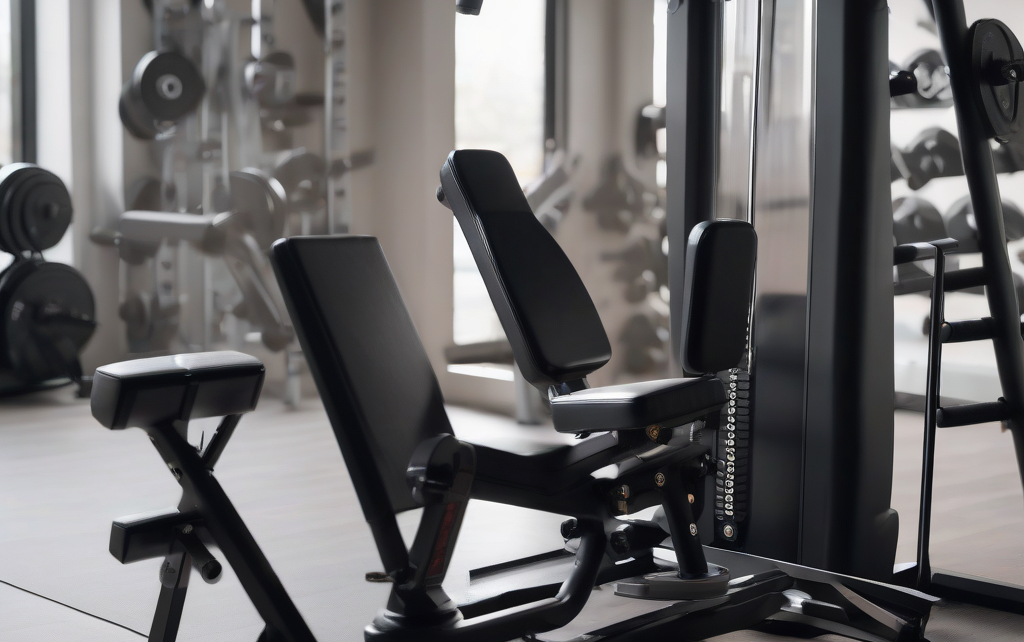
A horizontal leg press (or seated leg press) has you sitting upright, pushing the weight plate or stack directly in front of you parallel to the floor. The resistance is usually generated by a weight stack via cables or a leverage arm.
Pros of Horizontal Machines
- Back Friendly: The upright seated position keeps your spine neutral. It is widely considered the safer option for those with lumbar issues.
- Ease of Use: Changing weights on a selectorized stack takes seconds (just move the pin).
- Compact Height: Great for basements with low ceilings.
Cons of Horizontal Machines
- Weight Limit: Weight stacks often top out at 200-300 lbs. Serious lifters will outgrow this quickly.
- Price: Selectorized machines with weight stacks are much more expensive to ship and buy.
Deep Dive: Which is Better for Hypertrophy?
When it comes to building muscle (hypertrophy), the 45-degree leg press wins for most people. Why? Range of motion and load.
The 45-degree angle typically allows for a deeper stretch at the bottom (eccentric phase), which is crucial for muscle growth. Furthermore, the ability to micro-load with plates allows for linear progression—the key to getting bigger legs.
However, the horizontal press is excellent for “drop sets” and metabolic conditioning because you can change the weight instantly without standing up to strip plates off.
Space and Budget Considerations
For Small Spaces: Believe it or not, some 45-degree machines (like the Powerline PVLP156X) have a smaller footprint than long horizontal machines. Measure your floor space carefully. Horizontal machines are often 6-7 feet long.
For Tight Budgets: A plate-loaded 45-degree machine is cheaper per pound of resistance. You likely already have Olympic plates for your bench press, so you don’t need to buy a machine with its own expensive weight stack.
Frequently Asked Questions (FAQ)
Is a horizontal leg press bad for your knees?
Generally, no. In fact, it can be better for knees than a squat because it removes the balance/stability requirement. However, ensure your feet are placed high enough on the platform so your knees don’t travel too far past your toes if you have existing knee pain.
Can I replace squats with leg press?
You can, but you shouldn’t if you are able to squat. Squats engage the core, stabilizers, and nervous system in ways a machine cannot. Use the leg press as a primary accessory movement to build volume after your heavy squats.
How much weight is effective on a leg press?
Don’t ego lift. Effective weight is whatever allows you to complete 8-12 reps with a full range of motion (knees to chest) without your lower back rounding off the pad.
Final Verdict: The Winner
So, horizontal vs 45 degree leg press—who takes the crown?
- Buy a 45-Degree Leg Press IF: You want to build maximum muscle, have plenty of weight plates, and have a healthy lower back. The Body-Solid GLPH1100 is our top recommendation for home gyms.
- Buy a Horizontal Leg Press IF: You are recovering from injury, want maximum safety, have low ceilings, or want the convenience of a selectorized weight stack.
Ready to upgrade your leg day? Check out the best deals below.
Related: Check out our review of the Best Adjustable Dumbbells to complete your home gym setup.