
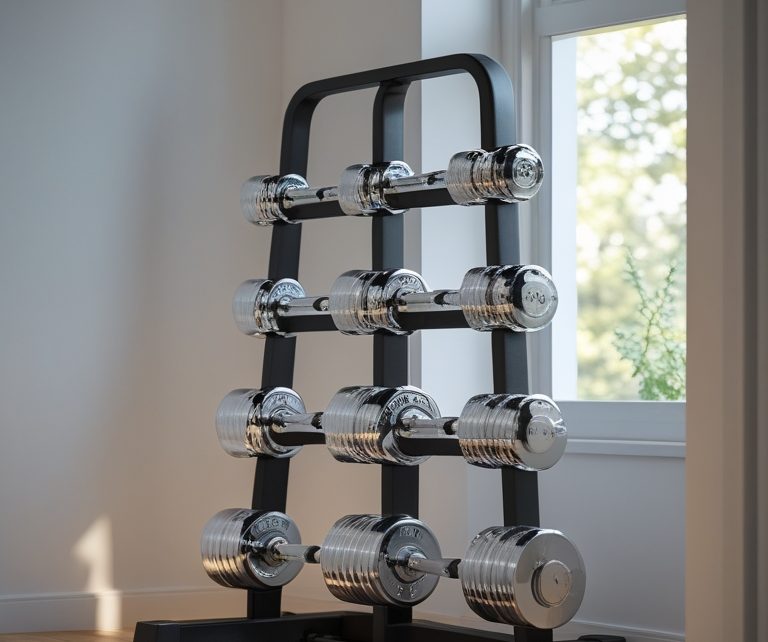
Vertical Dumbbell Rack: The Space-Saving Storage Solution That Keeps Your Home Gym Safe and Organized
Your dumbbells are getting stronger — but your floor space is staying the same. If you’re tired of tripping over weights or hunting for the right pair under the bed, a vertical dumbbell rack is the fastest way to turn chaos into calm. In this guide we’ll look at six popular rack styles, compare footprints and prices, and show you why a vertical dumbbell rack is the smartest pick for most home gyms.
Why Dumbbells Always Outgrow the Room
Most lifters start with three pairs: light, medium, and heavy. Six months later the collection has doubled. A scattered pile can eat up 12–15 square feet of floor and turn every workout into an obstacle course. A compact vertical storage tower shrinks that footprint by up to 70 % while keeping every pair easy to see and quick to grab.
The Six Rack Families You’ll Compare
Before you open your wallet, know the six main designs:
- Vertical (straight pole / tree)
- A-frame dumbbell rack (angled cradle)
- Saddle / tiered horizontal trays
- Wall mounted dumbbell rack (fold-away or fixed)
- Corner dumbbell rack (90° footprint)
- Modular dumbbell racks / custom dumbbell rack systems
Vertical Dumbbell Rack: The Space-Saving Champion
Vertical racks use a single upright pole with angled cradles. Think of a Christmas tree that holds iron instead of ornaments. Because the weight sits above the base, you can store 12 pairs in only 3 square feet of floor.
Quick Stats for Vertical Models
- Footprint: 2–4 square feet
- Capacity: 5–15 pairs
- Weight per slot: 5–50 lb pairs on most models
- Loading ease: Moderate (you lift to shoulder height)
- Stability: Excellent when the base is weighted or bolted
- Price tier: $60–$150
3 tier vs 2 tier rack: Which Vertical Size Is Best?
Shoppers often type “3 tier vs 2 tier rack” into Google because they want the most storage without extra bulk. Here’s the simple math:
- A 2 tier rack stores 5–8 pairs and fits dumbbells up to 30 lb.
- A 3 tier rack stores 10–15 pairs and handles 50 lb dumbbells on the bottom hooks.
- The 3 tier only adds about 15 % more floor space yet gives 40 % more storage.
If you own more than six pairs—or plan to buy more—choose the three-tier version. source
A-frame dumbbell rack: Easy on Your Back
A-frame racks look like a tiny swing-set. The angled cradles keep the handles waist-high so you don’t have to deep-squat to grab 40 pounders. They take a little more floor than a vertical rack but are still counted among space efficient weight racks for home gyms.
A-Frame Numbers at a Glance
- Footprint: 4–6 square feet
- Capacity: 6–10 pairs
- Weight range: 5–40 lb per pair on most models
- Loading ease: Very easy—no bending
- Stability: Excellent thanks to wide triangular base
- Price tier: $80–$200
Inside the A-frame world you’ll still see the same “3 tier vs 2 tier rack” choice. Two-tier A-frames are shorter, so they fit under low ceilings; three-tier models hold more weight but add 8–10 inches of height. source
Saddle Dumbbell Rack: Commercial Looks, Commercial Size
Saddle, or tiered horizontal trays, are what you see at big health clubs. Each tray is flat like a shelf, and the dumbbells nest side-by-side. This style is super easy to load, but it eats floor space—about 8–12 square feet for a 12-pair set. Choose this only if you have a garage or large spare room.
- Footprint: 8–12 square feet
- Capacity: 10–15 pairs
- Weight range: 5–100 lb and beyond
- Price: $200–$500
Wall mounted dumbbell rack: The Tiny-Floor Hero
Live in an apartment? A wall mounted dumbbell rack folds away like a Murphy bed for weights. You’ll need a sum finder and a drill, but once it’s up you’ll use zero floor space.
- Footprint: 1–2 square feet of floor (plus wall length)
- Capacity: 3–8 pairs
- Good for: hex or rubber-coated dumbbells up to 30 lb each
- Price: $50–$180
Corner Dumbbell Rack: Use the Dead Space
A corner dumbbell rack is shaped like a pizza slice. It hugs the corner so you can finally use that dusty 90-degree angle where nothing else fits.
- Footprint: 3–4 square feet
- Capacity: 5–8 pairs
- Weight range: 5–35 lb per pair
- Price: $90–$220
Modular dumbbell racks: Grow as You Go
A modular dumbbell rack is the Lego of storage. Start with one tray, bolt on more later. Some brands even let you bolt a plate tree or kettle horn on the side.
- Footprint: 4–12 square feet (you choose)
- Capacity: 10–20+ pairs
- Price: $250–$800+
Space-Efficiency Score Card
How many pairs can you store in each square foot? Here’s the simple math you asked for:
| Rack Type | Pairs Stored | Footprint (sq ft) | Pairs per Sq Ft |
|---|---|---|---|
| Vertical 2-tier | 6 | 2.5 | 2.4 |
| Vertical 3-tier | 12 | 3.0 | 4.0 |
| A-frame | 8 | 5.0 | 1.6 |
| Saddle / horizontal | 12 | 10.0 | 1.2 |
| Wall mounted | 5 | 1.5 | 3.3 |
| Corner | 7 | 3.5 | 2.0 |
| Modular | 15 | 8.0 | 1.9 |
The vertical 3-tier leads the pack at 4 pairs per square foot—proof that compact vertical storage is king for tight rooms. source
Material and Build Quality: What Lasts and What Rusts
Steel thickness is measured in “gauge.” The smaller the number, the thicker the steel. Here’s how it breaks down:
- 14-gauge = light home use
- 12-gauge = serious home gym
- 11-gauge = commercial tough
Look for powder-coat paint, not regular spray paint. Powder-coat is baked on and resists chips and rust. Plastic saddle inserts keep your dumbbell handles scratch-free. Welded joints last longer than bolt-only joints, but bolts let you swap parts if something bends. source
Load Rating and Safety: Keep the Rack—and Your Toes—Safe
Check the total load rating. A rack that holds 10 pairs of 40 lb dumbbells needs to support at least 400 lbs. Add a safety buffer of 20 %. Other must-haves:
- Rubber feet so the rack doesn’t skate across the floor
- Anti-tip design—wide base or counter-weight pegs
- Safety catches or lips so dumbbells can’t roll out
- At least a 2-year warranty; premium brands give lifetime coverage
Looks and Room Placement: Match Your Décor
Black is the standard color, but white, silver, and even matte earth tones are popping up in mid-tier lines. An upright vertical rack disappears against a wall; an A-frame rack doubles as a display piece. If you have hardwood, set the rack on rubber matting to stop dents.
Budget Guide: From Bargain to Bank Vault
- Entry ($60–$90): 14-gauge vertical tree, 5–8 pairs, 1-year warranty
- Mid ($120–$180): 12-gauge A-frame or vertical, 8–12 pairs, 3-5 year warranty
- Premium ($250+): 11-gauge modular systems, 15+ pairs, lifetime warranty
Quick-View Buying Checklist
- Measure ceiling height—tall vertical racks need 48–60 inches
- Count current pairs, then add two for future growth
- Check dumbbell handle width—fat grips won’t fit narrow saddles
- Verify total shipping weight; some racks arrive in 50 lb boxes
- Read the return policy—especially for third-party sellers
- Make sure you have a rubber mat or carpet scrap to protect floors
If You Have… Then Pick…
| User Case | Space | Budget | Best Rack |
|---|---|---|---|
| Home gym, 6–8 pairs | Moderate | Under $100 | Vertical 2-tier rack |
| Apartment, 4–5 pairs | Severe | Under $80 | Wall mounted dumbbell rack |
| Garage, 10+ pairs | Minimal | $150–$200 | A-frame or corner dumbbell rack |
| PT studio, 15+ pairs | Moderate | $300+ | Modular dumbbell racks |
| Beginner, 3–4 pairs | Severe | Under $60 | Vertical tree |
Final Rep: Why a Vertical Dumbbell Rack Wins
Among space efficient weight racks, the vertical dumbbell rack gives you the most storage per square foot, needs no wall drilling, and costs less than a new 30 lb pair of hex heads. Whether you choose a 2-tier starter or a 3-tier beast, you’ll reclaim floor space, cut set-up time, and keep your home gym looking sharp.
Ready to clean up the clutter? Browse our top-rated vertical dumbbell racks and enjoy fast, free shipping and a price-match guarantee. Your dumbbells—and your shins—will thank you.
