Foam Roller for Leg Circulation: The Complete Guide to Faster Recovery
Do your legs ever feel heavy, stiff, or sore after a long day or tough workout? You are not alone. Many people struggle with poor leg circulation, which can slow down recovery and leave you feeling sluggish. The good news is that a foam roller for leg circulation can make a huge difference. By using this simple tool, you can boost blood flow, ease muscle tension, and help your legs recover faster. In this post, we will explore why leg circulation matters, how foam rolling helps, and give you a complete lower-body routine you can start today.
Why Leg Circulation Matters for Recovery
Your legs do a lot of work every day. Whether you run, walk, stand, or sit, your leg muscles need a steady supply of oxygen and nutrients to function properly. Good blood flow also helps remove waste products like lactic acid that build up during exercise. When circulation is poor, your muscles do not get what they need to repair themselves. This leads to stiffness, soreness, and delayed recovery.
Poor circulation can happen for many reasons. Sitting for long hours, tight muscles, and lack of movement all reduce blood flow to the lower body. Over time, this can make your legs feel heavy and tired. You might even notice more swelling or cramping in your calves and feet.
Foam rolling works by applying gentle pressure along your muscles. This pressure helps break up tight spots called myofascial trigger points. It also stimulates sensory receptors in your muscles, which tells your blood vessels to widen. This process is called vasodilation. When your blood vessels widen, more blood can flow through them. This increased blood flow delivers oxygen and nutrients to your muscles and carries away waste products more quickly.
According to research published in the International Journal of Sports Physical Therapy, foam rolling has been shown to increase arterial blood flow and improve muscle performance and recovery. Source
So if you want to recover faster and feel better in your legs, improving circulation should be a top priority. And using a foam roller for leg circulation is one of the best ways to do it.
Foam Roller for Leg Circulation: The Complete Lower Body Routine
Now let us get into the actual routine. Below you will find step-by-step instructions for foam rolling your calves, quads, and hamstrings. These are the three main muscle groups that benefit most from foam rolling for circulation. Follow along and pay attention to how your legs feel before and after.
1. Foam Roller Calf Massage
The calves are one of the most important muscle groups when it comes to circulation. In fact, your calf muscles are often called your “second heart” because they help pump blood back up to your heart. When your calves are tight, this pumping action does not work as well. Blood can pool in your lower legs, leading to swelling and discomfort.
Step-by-Step Technique:
- Sit on the floor with your legs stretched out in front of you.
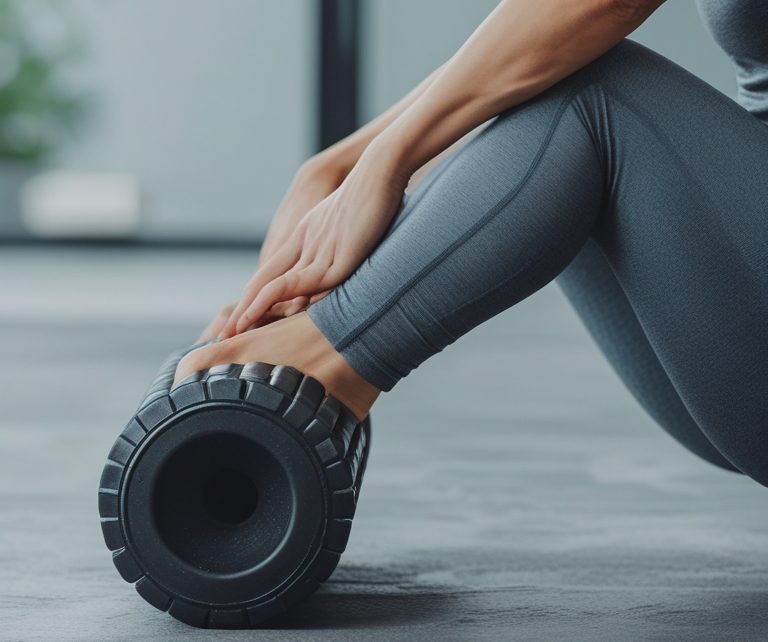
- Place the foam roller calf massage tool under one calf, just above your ankle.
- Support your upper body with your hands placed behind you on the floor.
- Lift your hips slightly and slowly roll from your ankle up to just below your knee.
- When you find a tender spot, pause for 20 to 30 seconds. Breathe deeply and let the muscle relax.
- Switch legs and repeat the process.
Tips for Best Results:
- Avoid rolling directly on your bones or joints. Stick to the muscle belly.
- Keep your core engaged to control how much pressure you apply.
- Use slow, controlled movements. Roll at about one inch per second.
- If you find a very tight spot, you can also try pointing and flexing your foot while holding pressure. This helps release the muscle in different positions.
Spending just one to two minutes on each calf can make a noticeable difference in how your legs feel. Improved circulation in the calves also helps reduce the risk of cramps and muscle strains.
Source: ACE Fitness Foam Rolling Guide
2. Foam Rolling Quads (Front Thighs)
Your quadriceps are the large muscles on the front of your thighs. They do a lot of work when you walk, run, climb stairs, or stand up from a chair. When your quads are tight, they can restrict blood flow and make your legs feel heavy. Foam rolling quads is a great way to relieve this tension and promote better circulation.
Step-by-Step Technique:
- Lie face down on the floor with your legs extended.
- Place the foam roller under your quads, just above your knees.
- Use your forearms to support your upper body weight.
- Slowly roll from just above your knees up toward your hip flexors.
- When you find a tight spot, pause for 20 to 30 seconds.
- To target different muscle fibers, you can slightly rotate your leg inward or outward while rolling.
- Switch legs and repeat.
Common Mistakes to Avoid:
- Rolling too fast: Speed reduces the effectiveness. Take your time.
- Too much pressure: You do not need to cause pain. Gentle, steady pressure works best.
- Rolling over the kneecap: Avoid rolling directly on your knee joint or kneecap.
- Holding your breath: Breathe deeply to help your muscles relax.
Spending two to three minutes on each quad can help release tension and open up blood vessels in this large muscle group. This improved circulation supports better mobility and faster recovery after workouts.
Source: Mayo Clinic Foam Rolling Tips
3. Foam Roller for Hamstrings (Back Thighs)
The hamstrings run along the back of your thighs. They are responsible for bending your knees and extending your hips. Many people have tight hamstrings from sitting too much or from intense exercise like running or cycling. Tight hamstrings can compress blood vessels and reduce oxygen delivery to your muscles. This is why using a foam roller for hamstrings is so important for circulation.
Step-by-Step Technique:
- Sit on the floor with your legs extended in front of you.
- Place the foam roller under your hamstrings, just above the back of your knees.
- Place your hands behind you for support.
- Lift your hips slightly off the floor so your weight rests on the roller.
- Slowly roll from just above the back of your knee up toward your glutes.
- When you find a tender spot, pause for 20 seconds and breathe deeply.
- Switch legs and repeat.
Why This Matters for Circulation:
Tight hamstrings do more than just limit your flexibility. They can actually squeeze blood vessels in your upper legs, making it harder for blood to flow freely. When blood flow is restricted, your muscles do not get enough oxygen. Waste products like lactic acid build up faster. This leads to soreness and longer recovery times.
Regular foam rolling of the hamstrings helps lengthen the muscle fibers and release tension. This improves vascular flow and helps your legs recover more efficiently.
Source: National Academy of Sports Medicine
Foam Roller for Runners Legs
If you are a runner, you already know how important recovery is. Running puts a lot of repetitive stress on your legs. Each foot strike sends a shockwave up through your feet, ankles, calves, knees, and hips. Over time, this can lead to muscle microtears, inflammation, and stiffness.
Using a foam roller for runners legs is one of the best things you can do to speed up recovery and reduce soreness. Foam rolling after a run helps clear out lactic acid and other metabolic waste products that build up during exercise. It also stimulates blood flow to bring fresh oxygen and nutrients to tired muscles.
A study published in the Journal of Strength and Conditioning Research in 2014 found that foam rolling after exercise reduced delayed onset muscle soreness (DOMS) and improved muscle function in runners. Source
Benefits for Runners:
- Faster recovery: Improved blood flow helps your muscles repair themselves more quickly after hard runs.
- Less soreness: Foam rolling can reduce the intensity of post-run muscle pain.
- Better performance: When your muscles recover faster, you can train harder and more often.
- Lower injury risk: Regular foam rolling keeps your muscles flexible and reduces the chance of strains or pulls.
For best results, try foam rolling within 30 minutes after your run. This is when your muscles are warm and most responsive to self-myofascial release. Focus on your calves, quads, and hamstrings using the techniques described above.
Foam Roller Leg Recovery – Putting It All Together
Now that you know the individual exercises, here is a complete foam roller leg recovery routine you can follow. This routine combines all the moves into one simple session that takes about 10 to 15 minutes.
The Complete Routine
- Foam roll calves: 1 to 2 minutes per leg
- Foam roll quads: 2 to 3 minutes per leg
- Foam roll hamstrings: 2 to 3 minutes per leg
Total time: about 10 to 15 minutes.
How Often Should You Do This?
- After workouts: Foam roll within 30 minutes of finishing your exercise session. This helps flush out waste products and kickstarts the recovery process.
- On rest days: Light foam rolling on rest days helps maintain tissue health and keeps blood flowing to your legs.
- 3 to 5 times per week: For most active people, foam rolling three to five times per week is enough to see real improvements in circulation and recovery.
Additional Tips for Better Leg Circulation
- Stay hydrated: Water helps maintain healthy blood volume and supports circulation. Aim to drink water throughout the day, especially before and after exercise.
- Elevate your legs: After foam rolling, try lying down and propping your legs up on a pillow or against a wall for 5 to 10 minutes. This helps venous return and reduces swelling.
- Combine with stretching: Gentle dynamic stretches before rolling and static stretches after rolling can further improve flexibility and blood flow.
- Move throughout the day: If you sit for long periods, take breaks to stand, walk, or stretch. Even a few minutes of movement every hour helps keep circulation going.
- Wear compression socks: Some people find that compression socks help support circulation, especially during long flights or after hard workouts.
Source: Harvard Health Publishing
When to Be Careful
Foam rolling is safe for most people, but there are some situations where you should be careful. Avoid foam rolling if you have:
- Open wounds or skin infections in the area
- Deep vein thrombosis (blood clots)
- Severe osteoporosis or fragile bones
- Acute muscle tears or strains
- Nerve issues or numbness in your legs
If you have any health concerns, check with your doctor before starting a foam rolling routine.
Conclusion
Your legs work hard for you every day. They deserve proper care and attention to keep them healthy and strong. Using a foam roller for leg circulation is a simple, affordable, and effective way to boost blood flow, reduce muscle soreness, and speed up recovery.
To recap what we covered:
- Good leg circulation is essential for muscle recovery and overall leg health.
- Foam rolling helps by breaking up tension and stimulating blood flow to your muscles.
- A foam roller calf massage targets your “second heart” and improves venous return.
- Foam rolling quads releases tightness in your front thighs and improves mobility.
- Using a foam roller for hamstrings helps reduce compression of blood vessels in your upper legs.
- Runners can especially benefit from foam rolling to reduce post-run soreness and recover faster for their next workout.
- A complete foam roller leg recovery routine takes just 10 to 15 minutes and can be done after workouts or on rest days.
The science backs it up. Studies have shown that foam rolling improves blood flow and reduces muscle soreness. And the best part is that you can do it at home with just a foam roller and a few minutes of your time.
So what are you waiting for? Grab your foam roller and start rolling today. Your legs will thank you with faster recovery, less soreness, and better performance. Healthy, happy legs are just a few rolls away.
Start your foam roller for leg circulation routine today and feel the difference!