Foam Roller for Muscle Pain: Your Complete Guide to Relief
1. Introduction: Why a Foam Roller for Muscle Pain Works
If you are dealing with daily aches and discomfort, you are not alone. Muscle pain can come from many places — exercise, sitting too long at a desk, an old injury, or even restless legs at night. The good news? There is a simple, affordable tool that can help: a foam roller for muscle pain. Foam rolling is a self-care method that many people use to find relief from tightness, soreness, strains, spasms, and even restless leg syndrome. In this guide, we will walk through how a foam roller for muscle pain works and show you exactly how to use it for each condition. Whether you are an athlete or just someone who wants to feel better, this article will give you practical, safe steps to follow.
2. How a Foam Roller Works on Muscles (The “Why”)
Before we dive into specific techniques, it helps to understand the science behind foam rolling. A foam roller is a tool used for self-myofascial release (SMR). This is a fancy way of saying it helps release tight spots in your muscles and the connective tissue around them (called fascia). Here is how it works in simple terms:
Trigger Point Release
Have you ever felt a knot in your muscle? That is called a trigger point. When you apply pressure to a trigger point with a foam roller, the muscle fibers relax and the tension releases. This is one of the main reasons a foam roller for muscle pain is so effective. source
Increased Blood Flow
The pressure from foam rolling helps push fresh blood into your muscles. Blood carries oxygen and nutrients that your muscles need to heal. It also helps flush out waste products that build up after exercise. Better blood flow means faster recovery and less pain. source
Breaking Down Adhesions
When you overuse a muscle or get injured, scar tissue can form between your muscle fibers and fascia. This scar tissue, also called adhesions, can make your muscles feel stiff and painful. Foam rolling helps break down these adhesions so your tissues can move more freely. source
Pain Reduction
Foam rolling works with your nervous system too. When you roll, you activate special sensors in your muscles called mechanoreceptors. These sensors send signals to your brain that can block pain signals. This is why foam rolling can make you feel better almost right away. source
In short, a foam roller for muscle pain helps by releasing tight spots, improving circulation, breaking down scar tissue, and calming your nervous system. Now let’s look at how to use it for specific problems.
3. Foam Roller for Tight Muscles – Releasing Tension
Tight muscles can limit how well you move and cause constant discomfort. A foam roller for tight muscles can help you release that tension and feel more flexible. Here are the most common areas where people get tight and how to roll them.
Quadriceps (Front of Thigh)
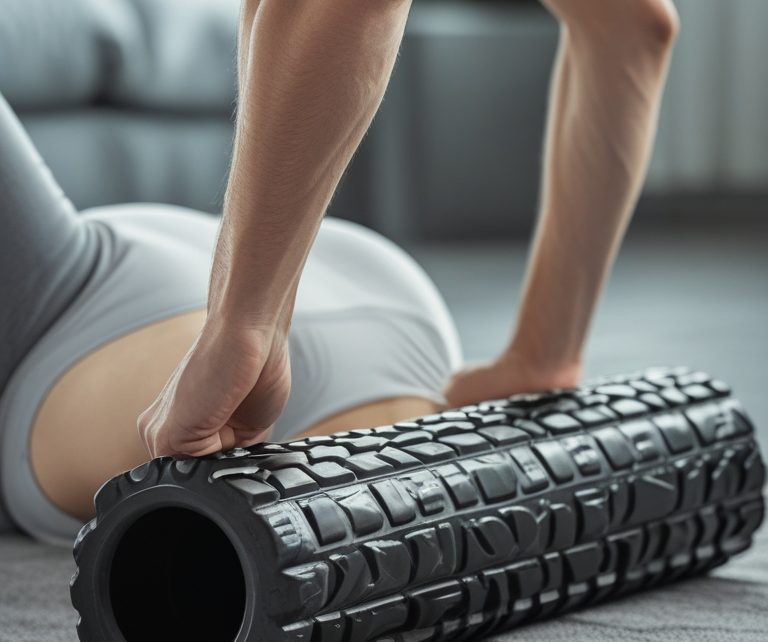
Sit on the floor with the foam roller under your thighs. Use your arms to support your weight. Roll slowly from your hip down to just above your knee. When you find a tender spot, pause and breathe for 20 to 30 seconds. This helps the muscle release. source
Hamstrings (Back of Thigh)
Sit with the roller under your hamstrings and your hands behind you for support. Roll from your glutes down to the back of your knee. Go slowly and breathe. If you find a tight spot, hold still for a few seconds until it softens.
Upper Back
Lie on your back with the foam roller placed horizontally under your shoulder blades. Cross your arms over your chest for comfort. Slowly roll up and down your upper back. Do not roll onto your neck or lower back. This is a great way to release tension from sitting at a desk all day.
IT Band (Side of Thigh)
Lie on your side with the roller under your outer thigh. Use your arms and other leg to support your weight. Roll slowly from your hip to your knee. The IT band can be quite tender, so take it easy. Avoid rolling directly on the bone at your hip or knee.
Key tips for tight muscles: Roll slowly — about one inch per second. Pause on tender spots for 20 to 30 seconds. Do not rush. When you use a foam roller for tight muscles, gentle and slow works much better than fast and hard.
4. Foam Roller for Sore Muscles – Post-Workout Recovery
After a tough workout, your muscles often feel sore. This is called delayed onset muscle soreness (DOMS). It usually shows up 24 to 48 hours after exercise. A foam roller for sore muscles can help you recover faster and feel less achy.
How to Tell Soreness from Injury
Soreness feels dull and spread out over a large area. It might make you feel stiff, but you can still move. An injury usually causes sharp pain in one spot, along with swelling or bruising. If you think you might be injured, check with a doctor before foam rolling. source
Gentle Rolling for DOMS
When your muscles are sore, use light to medium pressure. Do not push down hard. Roll each muscle group for 30 to 60 seconds. Move slowly and breathe deeply. This helps increase blood flow to your sore muscles and flush out waste products that cause pain. source
Best Times to Roll for Soreness
You can use a foam roller for sore muscles right after exercise or the next day. Many people find it helps most when they roll gently before stretching. Just remember: sore muscles need gentle care. If rolling makes the pain worse, stop and rest.
5. Foam Roller for Muscle Strain – Gentle, Targeted Relief
A muscle strain happens when a muscle is overstretched or torn. This can be painful and needs careful treatment. A foam roller for muscle strain can help, but you must use it the right way.
Important Safety Warning
If you have a severe strain or think your muscle might be torn, do not roll directly on the injured area. Rolling on a torn muscle can make the injury worse. Always check with a doctor if your pain is sharp or if you cannot move the muscle at all. source
How to Roll Around a Strain
For a mild to moderate strain, you can use a foam roller for muscle strain by working on the muscles around the injury. For example, if you strained your hamstring, roll your glutes, quads, and calves instead. This helps improve blood flow to the whole area without putting pressure on the hurt spot. Use very light pressure and partial weight-bearing (do not put all your weight on the roller). source
When to Start Rolling
Wait at least 48 to 72 hours after the strain happens before foam rolling. In the first few days, rest and ice are better. Once the sharp pain goes away, you can gently start rolling the muscles around the strain. Go slow and stop if you feel sharp pain.
6. Foam Roller for Muscle Spasms – Calming Involuntary Contractions
A muscle spasm is a sudden, uncontrollable tightening of a muscle. It can feel like a cramp or a twitch. Spasms are different from general tightness — they are involuntary and can be sharp. A foam roller for muscle spasms can help calm them down.
What Causes Muscle Spasms?
Spasms can happen from fatigue, dehydration, or nerve irritation. They can also happen when you overwork a muscle. When a muscle spasms, it stays tight and will not relax on its own. This is where foam rolling can help. source
Techniques for Easing Spasms
When using a foam roller for muscle spasms, use slow, sustained pressure. Do not roll quickly back and forth. Instead, place the roller on the spasming muscle and apply gentle, steady pressure. Hold it there for 30 to 60 seconds while breathing deeply. The steady pressure helps stimulate mechanoreceptors that tell your muscle to relax. source
Common areas for spasms include the lower back, calves, and neck. For lower back spasms, lie on your back with the foam roller under your low back (but avoid rolling directly on your spine). For calf spasms, sit with the roller under your calf and roll gently. Always use light pressure and go slow.
7. Foam Roller for Restless Legs – Soothing Nighttime Discomfort
Restless legs syndrome (RLS) causes uncomfortable feelings in your legs that make you want to move them. It often gets worse at night and can make it hard to sleep. A foam roller for restless legs can help soothe these sensations and make bedtime more peaceful.
How Foam Rolling Helps RLS
Foam rolling stimulates blood flow and activates nerve pathways in your legs. This can calm the uncomfortable sensations that come with RLS. By relaxing the muscles and improving circulation, foam rolling may help reduce the urge to move your legs at night. source
A Simple Pre-Bedtime Routine
Try this gentle routine about 30 minutes before bed using a foam roller for restless legs:
- Calves: Sit on the floor with the roller under your calves. Roll slowly from your ankle to your knee for 60 seconds on each leg.
- Shins: Lie face-down with the roller under your shins. Roll gently from your ankle to your knee for 30 seconds on each leg.
- Hamstrings: Sit with the roller under your hamstrings. Roll slowly from your glutes to the back of your knee for 60 seconds on each leg.
Use light pressure and take slow, deep breaths. The goal is to relax, not to work deep into the muscle. source
Many people find that using a foam roller for restless legs before bed helps them fall asleep faster and stay asleep longer. It is a simple, drug-free way to manage RLS symptoms.
8. Best Practices & Safety Tips
Foam rolling is safe for most people, but there are some important rules to follow. Here are the best practices to get the most out of your foam roller for muscle pain while staying safe.
When NOT to Foam Roll
Do not use a foam roller if you have any of these conditions:
- Acute injuries (sudden injuries that are less than 48 hours old)
- Broken bones or fractures
- Open wounds or skin infections
- Deep vein thrombosis (blood clots)
- Severe varicose veins
- Cancer or tumors in the muscle area
If you are not sure whether foam rolling is safe for you, ask your doctor first. source
Duration Guidelines
Roll each muscle group for 30 to 60 seconds. You can repeat this 2 to 3 times per area if needed. Do not roll any one spot for more than 2 minutes. Also, avoid rolling directly on bones, joints, or your spine. Stick to the fleshy parts of your muscles. source
How to Know if You Are Overdoing It
Foam rolling should feel uncomfortable but not sharp or painful. If you notice any of these signs, ease up:
- Bruising after rolling
- Sharp or stabbing pain during rolling
- Increased soreness that lasts more than a day
- Swelling in the area you rolled
If you see bruises or feel worse after rolling, take a break for a few days. You might be pressing too hard or rolling too fast. Remember, a foam roller for muscle pain is a tool for healing — not for punishment.
Extra Safety Tips
- Always warm up your muscles before rolling, or roll after exercise when muscles are warm.
- Drink plenty of water after foam rolling to help flush out toxins.
- Combine foam rolling with stretching for the best results.
- Start with a softer foam roller if you are new to this practice.
9. Conclusion – Start Rolling and Feel Better
As you can see, a single foam roller for muscle pain can help with so many different problems. Whether you have tight muscles from sitting all day, sore muscles after a workout, a mild muscle strain, annoying muscle spasms, or restless legs at night — foam rolling can give you relief.
Here is a quick recap of what we covered:
- A foam roller for muscle pain works by releasing trigger points, boosting blood flow, breaking down scar tissue, and calming your nerves.
- A foam roller for tight muscles helps you release tension in your quads, hamstrings, upper back, and IT band.
- A foam roller for sore muscles speeds up recovery after exercise.
- A foam roller for muscle strain should be used gently and around the injury, not directly on it.
- A foam roller for muscle spasms uses steady, sustained pressure to calm involuntary contractions.
- A foam roller for restless legs can soothe nighttime discomfort and help you sleep better.
The key to success is to start slow, listen to your body, and roll consistently. You do not need to spend a lot of money on fancy equipment or treatments. A simple foam roller and a few minutes of your day can make a big difference in how you feel.
If you are new to foam rolling, begin with just 5 minutes a day. Focus on the areas that bother you most. As you get more comfortable, you can add more time and try different techniques. Remember: gentle and consistent wins the race.
Are you ready to feel better? Grab a foam roller for muscle pain today and start your journey toward less pain and more freedom of movement. Your muscles will thank you!
Disclaimer: This article is for informational purposes only and does not replace professional medical advice. If you have a serious injury or medical condition, please consult a healthcare provider before starting any foam rolling routine.